
Learn more
Learn more about why this park is special
Comeroo campground is in Cuttaburra National Park. Here are just some of the reasons why this park is special:
A biodiversity oasis

Cuttaburra National Park features a patchwork of landscapes, from tree-lined river floodplains and swamps to claypans, grasslands, shrubland plains, and rocky mulga-covered hills. It’s home to 292 native plant species, 109 birds, 22 reptiles, 13 frogs, and 14 native mammals. Threatened species found here include the stripe-faced dunnart, eastern fat-tailed gecko, black-breasted buzzard, and hooded robin.
Birdwatchers of all levels will find a vibrant mix of wetland, woodland, and grassland birds – common and rare, large and small, gregarious and colourful. And for those up for a challenge, see if you can identify the difference between the park’s many little brown birds.
- Cuttaburra scenic drive Discover outback, woodland, wetlands and wildlife on Cuttaburra scenic drive, near Bourke. This 4WD touring loop is a great way to explore the wide, open landscapes of Cuttaburra National Park.
Aboriginal connections

Cuttaburra National Park sits in the heart of Paroo River and Warrego River Country, a place with deep cultural significance for Aboriginal people. The park and nearby areas are believed to hold very high Aboriginal heritage value. Aboriginal people likely lived and travelled widely across this land, and many cultural items have been found here, including wells, waterholes, artefact scatters, scar trees and stone arrangements.
- Cuttaburra scenic drive Discover outback, woodland, wetlands and wildlife on Cuttaburra scenic drive, near Bourke. This 4WD touring loop is a great way to explore the wide, open landscapes of Cuttaburra National Park.
Where yapunyah trees glow

Take a drive through golden groves of yapunyah woodland. These native eucalyptus trees are a photographer’s dream, with their striking mix of dark, rough bark and smooth, reddish branches. In winter, yapunyah bursts into bloom, adding vibrant colour to the landscape and releasing rich nectar that attracts insects and birds like honeyeaters. You’ll mostly find yapunyah in Australia’s inland and arid or semi-arid regions. In NSW, it grows mainly near the Warrego and Paroo rivers.
- Cuttaburra scenic drive Discover outback, woodland, wetlands and wildlife on Cuttaburra scenic drive, near Bourke. This 4WD touring loop is a great way to explore the wide, open landscapes of Cuttaburra National Park.
Life along the water

The park is named after Cuttaburra Creek, which is one continuous waterway that flows through the middle of the park after rain. When the creek dries up it retracts into a chain of separate waterholes, known as a chain of ponds, including Maranoa Waterhole and Cumeroo Waterhole.
The creek lies within the Cuttaburra Basin, an integral part of the Paroo and Warrego floodplains in the Murray-Darling Basin’s northern region. During large floods, floodwaters travel vast distances from the headwaters in central-west Queensland to reach this area. Though rainfall is erratic in this region, leading to long periods of dryness, the Cuttaburra Basin plays a vital role in connecting these two outback rivers when floodwaters arrive.
- Cuttaburra scenic drive Discover outback, woodland, wetlands and wildlife on Cuttaburra scenic drive, near Bourke. This 4WD touring loop is a great way to explore the wide, open landscapes of Cuttaburra National Park.
Plants and animals protected in this park
Animals
-
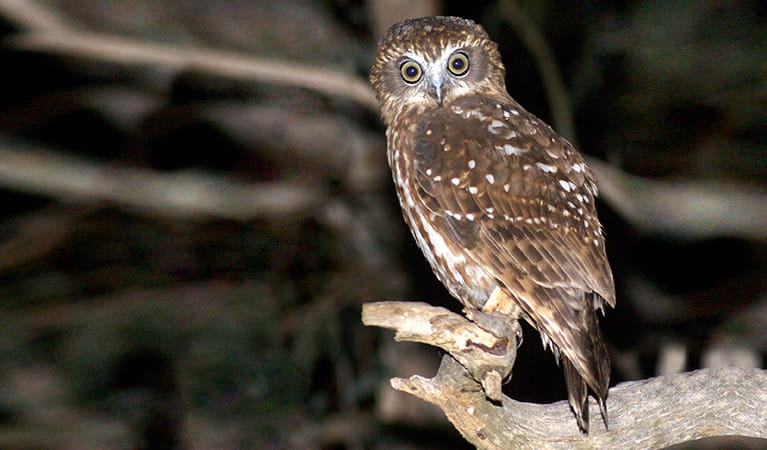
Southern boobook (Ninox novaeseelandiae)
The southern boobook, also known as the mopoke, is the smallest and most common native owl in Australia. With a musical 'boo-book' call that echoes through forests and woodlands, the southern boobook is a great one to look out for while bird watching.
-
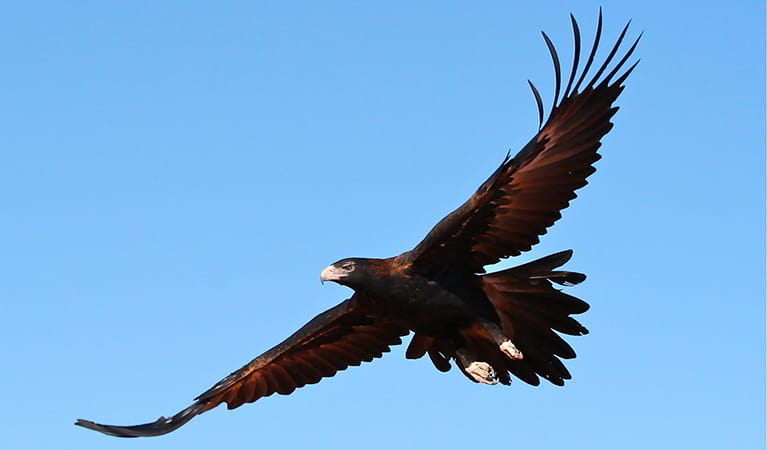
Wedge-tailed eagle (Aquila audax)
With a wingspan of up to 2.5m, the wedge-tailed eagle is Australia’s largest bird of prey. These Australian animals are found in woodlands across NSW, and have the ability to soar to heights of over 2km. If you’re bird watching, look out for the distinctive diamond-shaped tail of the eagle.
-
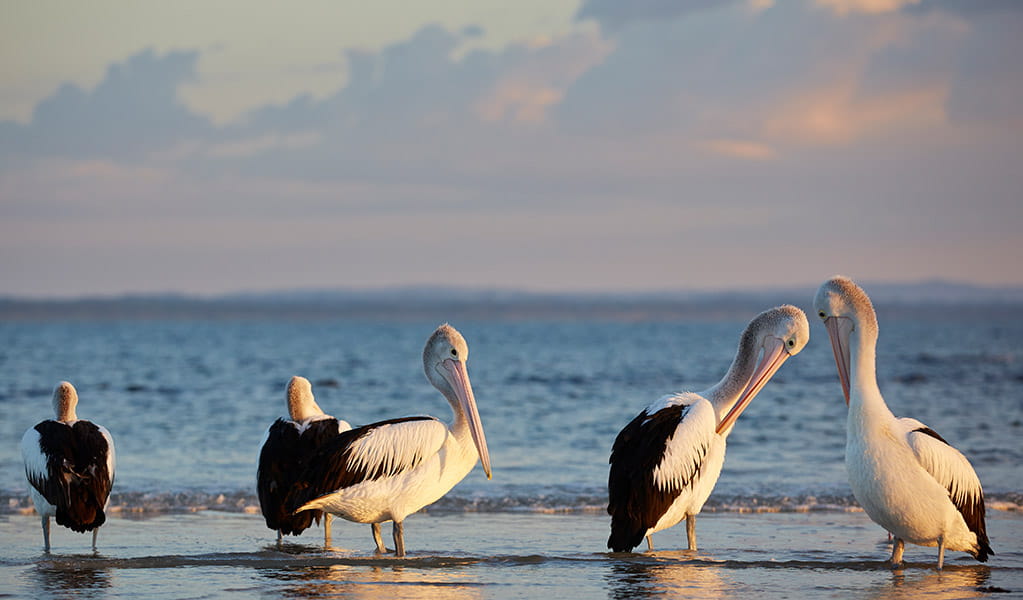
Australian pelican (Pelecanus conspicillatus)
The curious pelican is Australia’s largest flying bird and has the longest bill of any bird in the world. These Australian birds are found throughout Australian waterways and the pelican uses its throat pouch to trawl for fish. Pelicans breed all year round, congregating in large colonies on secluded beaches and islands.
-

Eastern blue-tongue lizard (Tiliqua scinciodes)
The eastern blue-tongue lizard, one of the largest skinks in Australia, is found throughout most of NSW. When threatened, the eastern blue-tongue lizard displays its blue tongue in a wide-mouthed intimidating show. Not an agile animal, they feed on slow-moving beetles and snails.
-
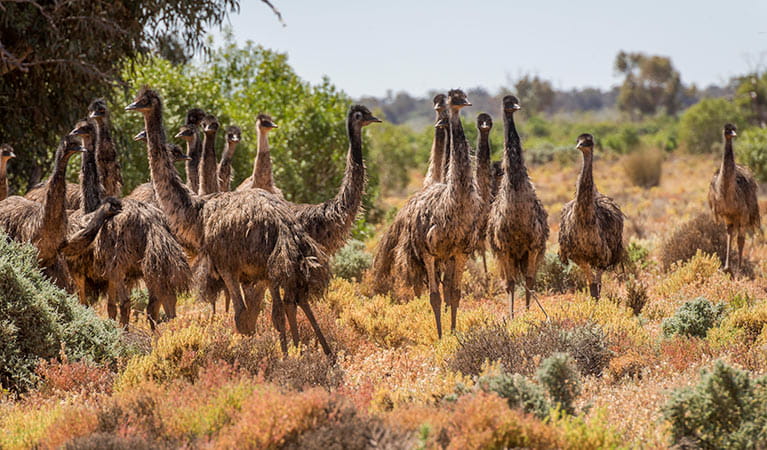
Emu (Dromaius novaehollandiae)
The largest of Australian birds, the emu stands up to 2m high and is the second largest bird in the world, after the ostrich. Emus live in pairs or family groups. The male emu incubates and rears the young, which will stay with the adult emus for up to 2 years.
-
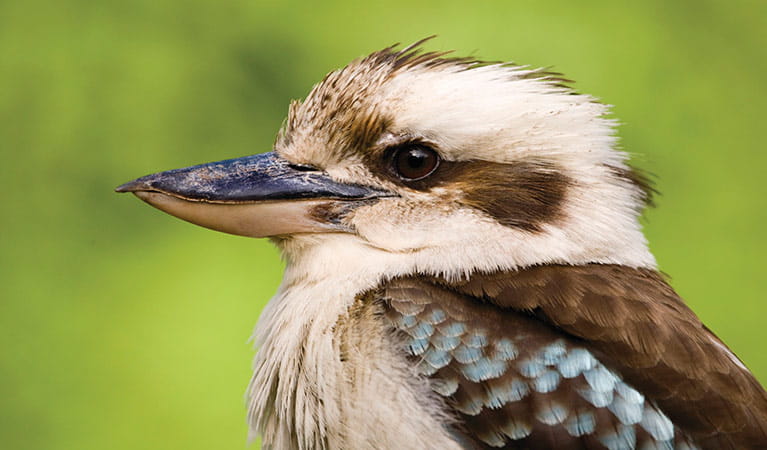
Kookaburra (Dacelo novaeguineae)
Of the 2 species of kookaburra found in Australia, the laughing kookaburra is the best-known and the largest of the native kingfishers. With its distinctive riotous call, the laughing kookaburra is commonly heard in open woodlands and forests throughout NSW national parks, making these ideal spots for bird watching.
-
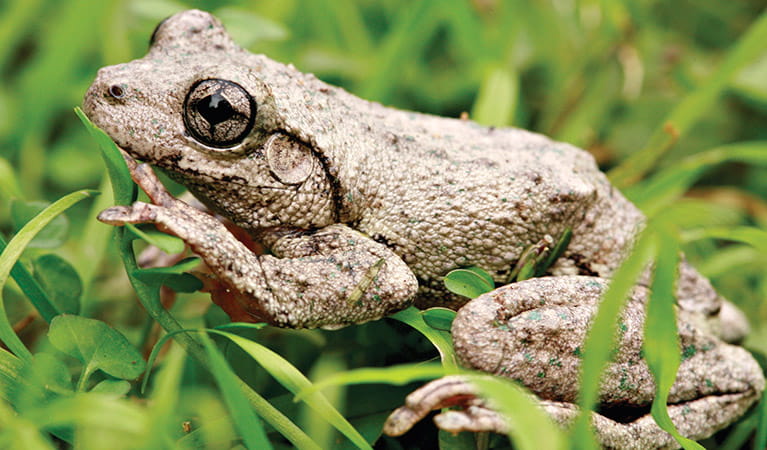
Peron's tree frog (Litoria peroni)
Peron’s tree frog is found right across NSW. These tree-climbing and ground-dwelling Australian animals can quickly change colour, ranging from pale green-grey by day, to a reddish brown with emerald green flecks at night. The male frog has a drill-like call, which has been described as a 'maniacal cackle’.
-
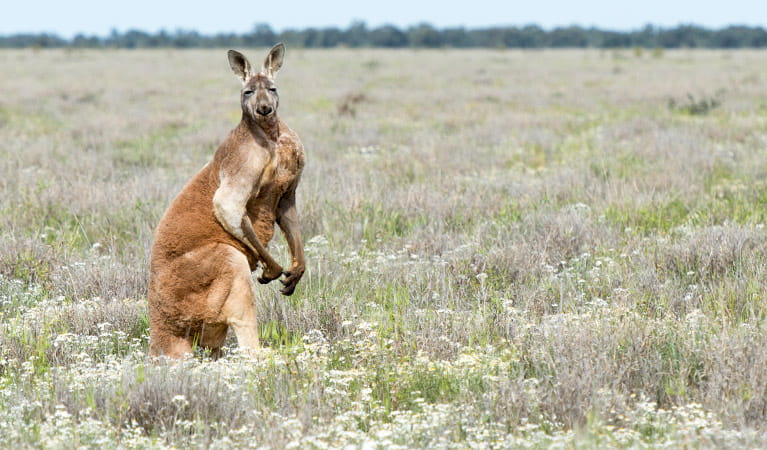
Red kangaroo (Macropus rufus)
The red kangaroo is one of the most iconic Australian animals and the largest marsupial in the world. Large males have reddish fur and can reach a height of 2m, while females are considerably smaller and have blue-grey fur. Red kangaroos are herbivores and mainly eat grass.
-
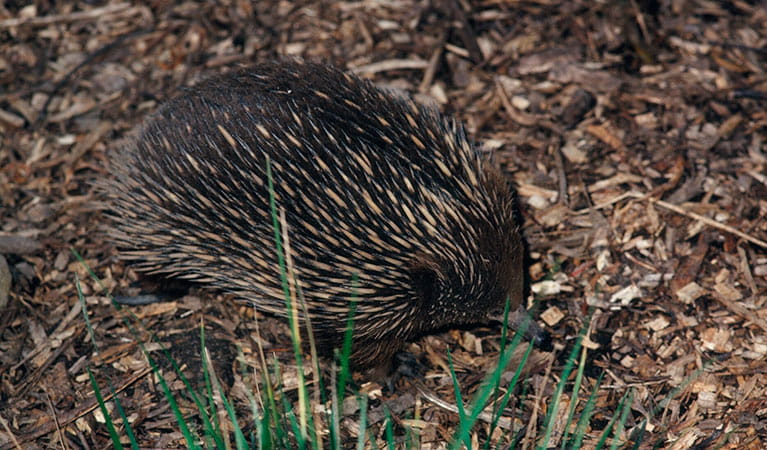
Short-beaked echidna (Tachyglossus aculeatus)
One of only 2 egg-laying mammals in the world, the short-beaked echidna is one of the most widespread of Australian native animals. Covered in spines, or quills, they’re equipped with a keen sense of smell and a tube-like snout which they use to break apart termite mounds in search of ants.
Plants
-
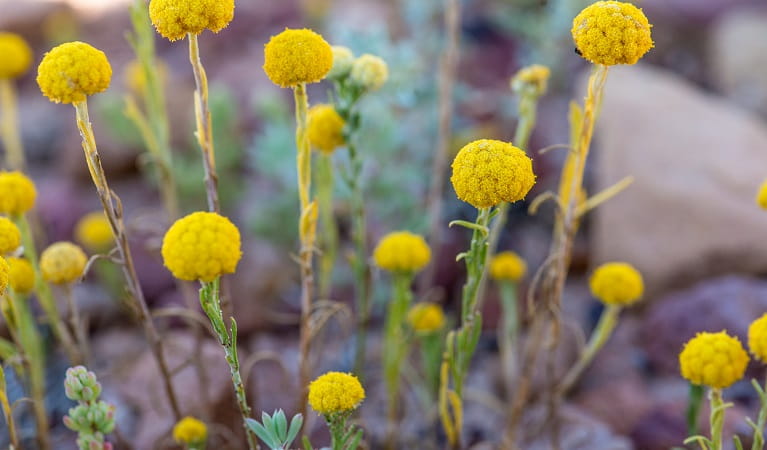
Billy buttons (Craspedia spp. )
Billy buttons are attractive Australian native plants that are widespread throughout eastern NSW in dry forest, grassland and alpine regions such as Kosciuszko National Park. The golden-yellow globe-shaped flowers are also known as woollyheads. Related to the daisy, billy buttons are an erect herb growing to a height of 50cm.
-
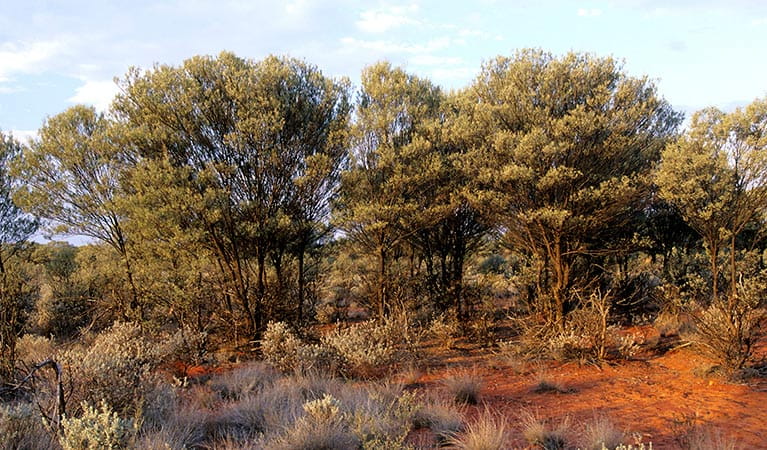
Mulga (Acacia aneura)
Mulga are hardy Australian native plants found throughout inland Australia. With an unusually long tap root, the mulga is able to withstand long periods of drought.
-
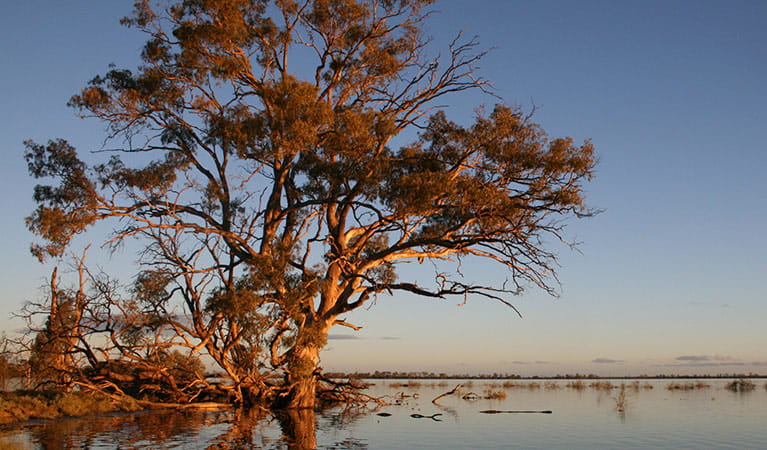
River red gum (Eucalpytus camaldulensis)
Australian native plants, majestic river red gum trees are widespread across Australian inland river systems. The river red gum is a dominant tree species of the Murray-Darling basin which spans NSW, Queensland and Victoria. This iconic native eucalypt grows to a height of 30m and is thought to have a lifespan up to 500-1000 years.
-
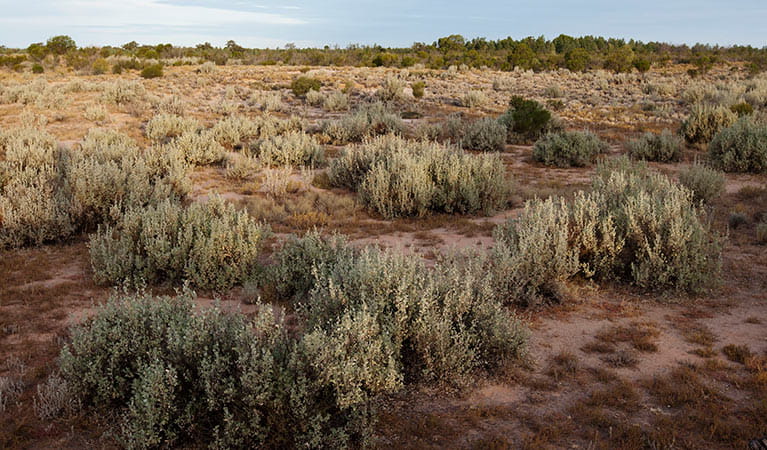
Saltbush (Atriplex nummularia)
A hardy Australian native plant, the saltbush is a small spreading shrub that can withstand dry salty soils such as those found in the desert plains of western NSW. It is grey-white in colour and has small spear-shaped succulent leaves. It flowers from December to April.
Look out for...
Billy buttons
Craspedia spp.

Billy buttons are attractive Australian native plants that are widespread throughout eastern NSW in dry forest, grassland and alpine regions such as Kosciuszko National Park. The golden-yellow globe-shaped flowers are also known as woollyheads. Related to the daisy, billy buttons are an erect herb growing to a height of 50cm.
Environments in this park
- Desert and arid shrubland environments
- Grassland environments
- Wetland environments
- Woodland environments