
Hawkweed eradication program
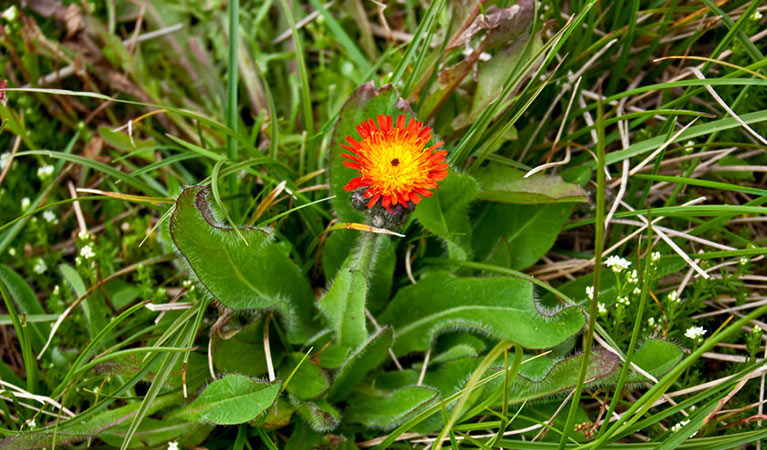
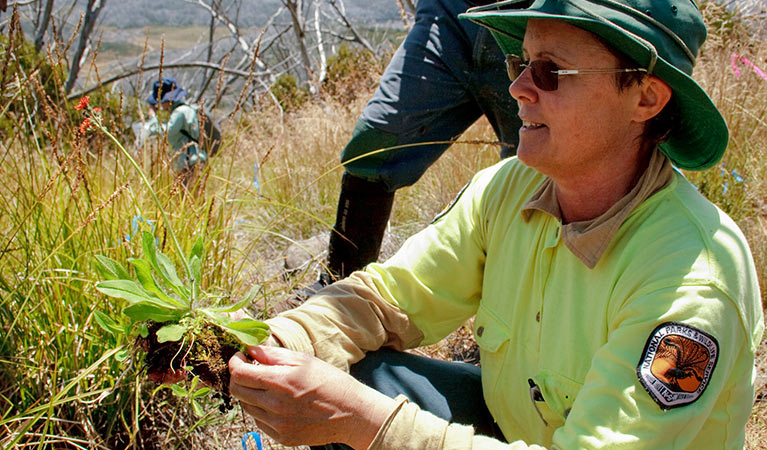
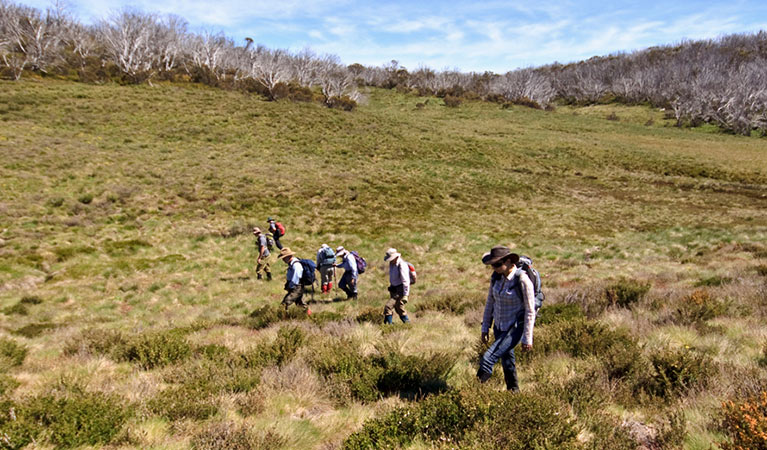
Orange and mouse-ear hawkweed are highly invasive weeds in Kosciuszko National Park. There are small infestations of both species in the park's sensitive alpine and sub-alpine environments, and orange hawkweed is also in nearby grazing land. They are a threat to Australian native plants, biodiversity and agriculture.
Read more about Hawkweed eradication program
The hawkweed eradication program involves surveillance by NSW National Parks staff, volunteers, drones in the air and scent detection dogs on the ground to find hawkweed plants. Infestations are marked, treated with herbicides and continually monitored to ensure eradication.
Orange hawkweed and mouse-ear hawkweed have daisy-like orange and yellow flowers respectively, and are seriously invasive weeds. Both species are Prohibited Matter under the NSW Biosecurity Act 2015 and are on the National Environmental Alert List. They're also recognised as a National Agricultural Sleeper Weed, given their significant impacts on grazing lands in New Zealand and North America.
Orange hawkweed was discovered in Kosciuszko National Park in 2003. Since then, our management program has sought to eradicate the species from NSW and prevent widespread infestations and long-term control costs. There's evidence this is working, with only a small number of plants now found within thousands of hectares of surveyed area.
Mouse-ear hawkweed was detected on the Main Range in Kosciuszko National Park in late 2014. The response was swift and our efforts to eradicate the weed are on track, with only a few plants found in the last 2 to 3 years.
It’s a long process, but the eradication program is contributing to our understanding of hawkweed biology and ecology, and is on track. The program is also providing information that increases the likelihood of success for other weed eradication programs in the future.
Help eradicate hawkweed
Cleanliness first
- Before you visit, clean all your hiking, biking and camping equipment so you don't accidentally bring any weeds into a national park. Use a stiff-bristled brush or water to brush off any seeds and dirt from boots, gaiters and other equipment.
- Once you're in a park, stay on formed tracks. Look out for dedicated boot cleaning stations at trailheads and follow instructions on signs.
- At the end of your trip, clean your gear again when you return home. Use a solution of 70% methylated spirits (or ethanol) and 30% water to spray particularly shoes, boots and other equipment.
Follow park signs and directions
In Kosciuszko National Park signs are posted in areas where there are known hawkweed infestations to limit the potential accidental spread of hawkweed seeds. Don’t enter exclusion zones.
Let us know if you’ve spotted a hawkweed plant
- You don't have to be certain that you've found hawkweed to report it. All potential sightings help NPWS work towards eradication.
- Take a few photos of the plant leaves, flower (if present) and overall plant. Please don’t disturb the plant but leave it in place.
- Record the location as accurately as you can, for example, using GPS coordinates or What3Words.
- Email the pictures and location to the NPWS Hawkweed Management Team or call 02 6450 5565.