Broad Swamp to Birds Rock walking track
Gardens of Stone State Conservation Area
Affected by closures, check current alerts


Overview
Broad Swamp to Birds Rock walking track is an adventurous walk in Gardens of Stone State Conservation Area. Explore 17.5km of swamps and creeks, towering forests, gorges and pagoda formations on this one-way walk, near Lithgow.
- Accessibility
- No wheelchair access
- Distance
- 17.5km one-way
- Time suggested
- 7 - 8hrs
- Grade
- Grade 3
- Trip Intention Form
-
It's a good idea to let someone know where you're going. Fill in a trip intention form to send important details about your trip to your emergency contact.
- Personal Locator Beacon
-
Hire a Personal Locator Beacon (PLB) for free at Blue Mountains Heritage Centre in Blackheath.
- What to
bring - Drinking water, sturdy shoes, suitable clothing, clothes for all weather conditions, first aid kit, personal locator beacon, hat, sunscreen, snacks
- Please note
- Without a car shuffle, the walk from Broad Swamp carpark to Carne View lookout is about 27km return and will take 8-10 hours.
- It takes about 30min to drive between carparks one-way.
- There is no drinking water in the area, please bring enough water for a full day walk with you.
- There’s no phone reception along the walk. Download Gardens of Stone State Conservation Area in our NSW National Parks app before you leave home. You’ll be able to check your location on the map even when you have no mobile reception on the track.
- Closures for construction will continue over the next 12-18 months, so plan ahead and check alerts before you leave home.
Broad Swamp to Birds Rock walking track is a heart-pumping 17.5km hike in Gardens of Stone State Conservation Area.
You’ll need two 4WD vehicles for a car shuffle to make this a one-way walk as Birds Rock carpark is accessible by 4WD only.
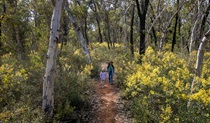
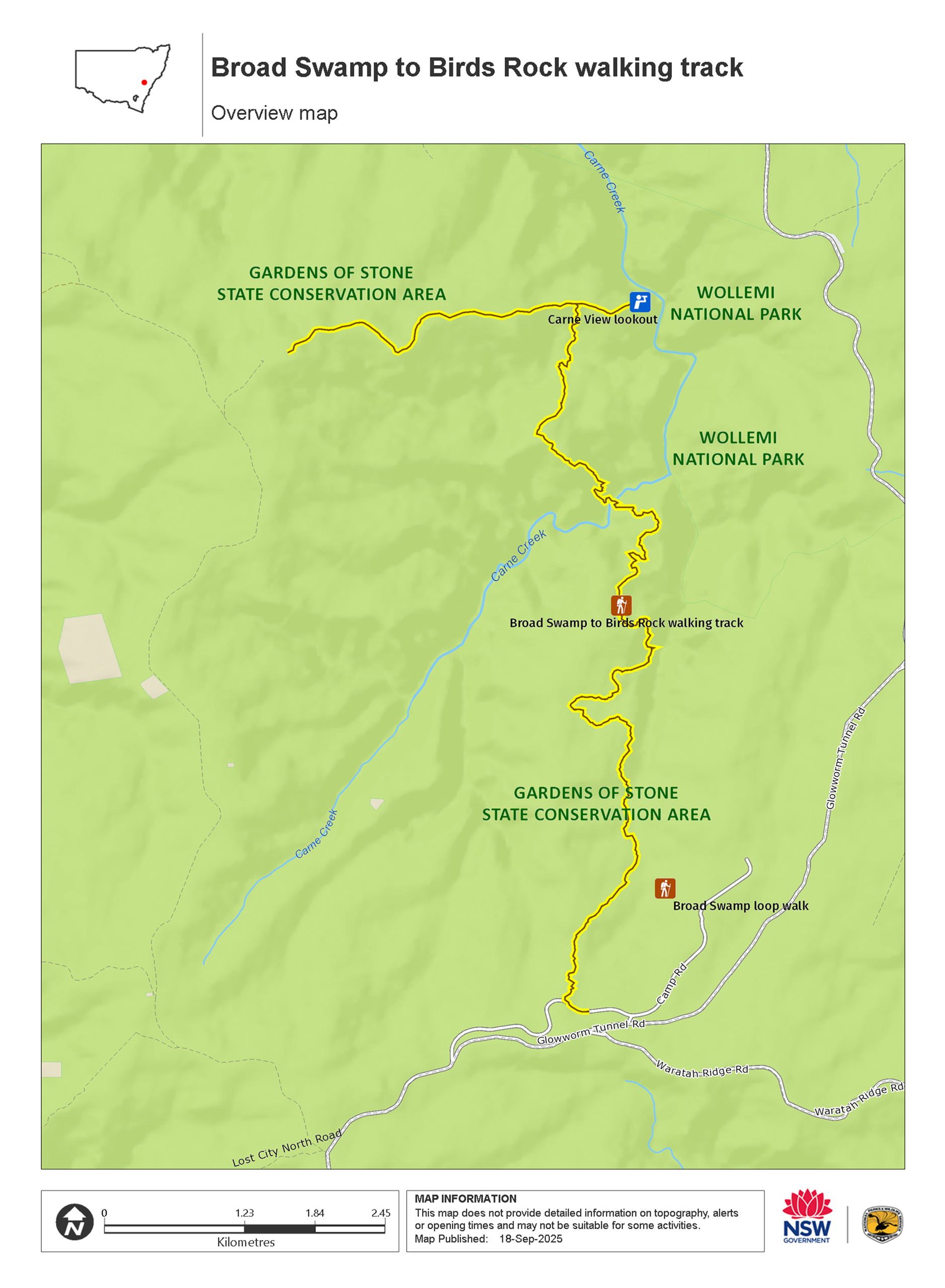
You’ll start your hike on Broad Swamp loop walk which follows a track through the largest area of Newnes Plateau Shrub Swamp in the reserve. Listen for the melodic trill of scarlet and flame robins as you weave through their habitat on bog bridges and stepping stones. Beyond Broad Swamp, you'll follow the ups and downs of the terrain, from deep gullies to ridgetops with outstanding vistas.
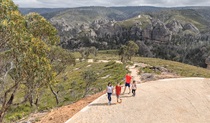
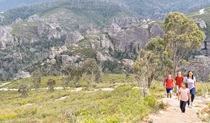
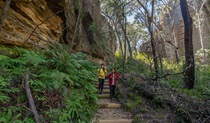
After a gentle walk-through eucalypt bushland, sweeping views of ‘platy’ pagoda rock formations emerge 3.5km into the journey. Soon after, you’ll descend into a gully of soaring Blue Mountains ash forest. Enjoy the cool of the valley as you meander through creeks and narrow, winding canyons.
A challenging climb at the 7.5km mark will test your fitness. You’ll gain 100m of elevation as you navigate winding steps up to a scenic clifftop view overlooking the headwaters of Carne Creek. It’s a great spot to rest before heading towards Carne View lookout.
At the junction for Birds Rock, follow the track on the right for 650m to get to Carne View lookout. This 1.5km walk to the lookout and back is worth it for incredible views of sheer cliffs above Carne Creek with Pyramid Rock just visible above the tree line.
Once you return to the junction, finish the walk by following the fire trail uphill for another 3km to reach Birds Rock carpark. The drive back to Broad Swamp carpark is about 30min.
The walk to Carne View lookout from Birds Rock carpark is 3km return and can also be done on its own if you have a 4WD.
Broad Swamp to Birds Rock walking track is part of Gardens of Stone Pagoda Walk, a new 30km walk under construction. Learn more about this multi-day walk and other infrastructure upgrades planned for the park.
Also see:

Map
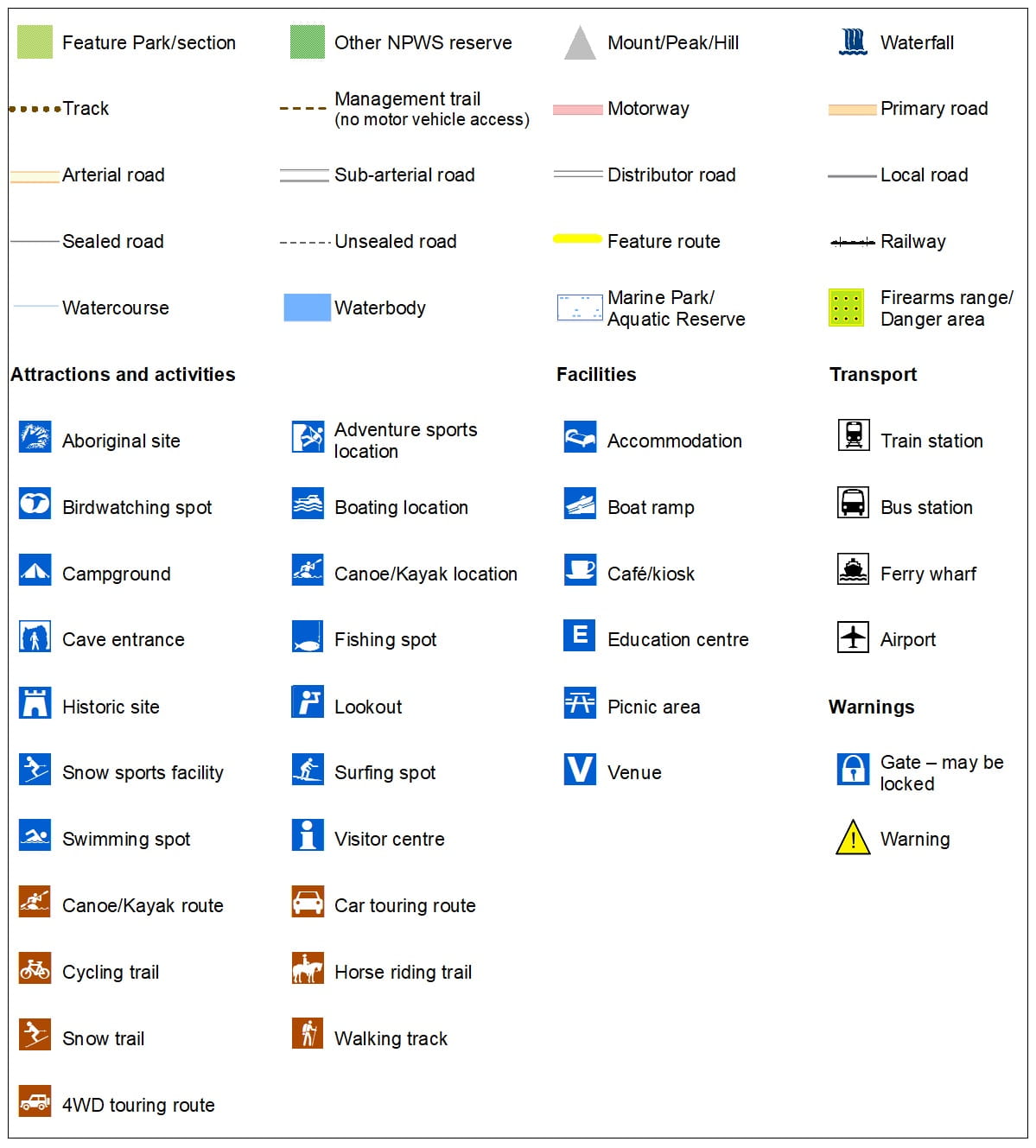
Map legend
Local alerts
For the latest updates on fires, closures and other alerts in this area, see https://www.nationalparks.nsw.gov.au/things-to-do/walking-tracks/broad-swamp-to-birds-rock-walking-track/local-alerts
General enquiries
- National Parks Contact Centre
- 7am to 7pm daily
- 1300 072 757 (13000 PARKS) for the cost of a local call within Australia excluding mobiles
- parks.info@environment.nsw.gov.au
Park info
- in Gardens of Stone State Conservation Area in the Sydney and surrounds region
Gardens of Stone State Conservation Area is always open but may have to close at times due to poor weather or fire danger.
Visitor info
All the practical information you need to know about Broad Swamp to Birds Rock walking track.
Track grading
Features of this track
Distance
17.5km one-way
Time
7 - 8hrs
Quality of markings
Sign posted
Experience required
Some bushwalking experience recommended
Gradient
Gentle hills
Steps
Many steps
Quality of path
Formed track, some obstacles
Getting there and parking
Broad Swamp to Birds Rock carpark walking track is in Gardens of Stone State Conservation Area. To get to Broad Swamp via State Mine Gully Road:
- Follow the signposted route from the corner of Bridge Street and Main Street Lithgow.
- From Bridge Street, turn right at Inch Street.
- Turn left at Atkinson Street and after 750m, keep right onto State Mine Gully Road. State Mine Gully Road is a gravel road that becomes Glowworm Tunnel Road.
- Follow Glowworm Tunnel Road for 11km to the junction of Western Boundary Road. Turn left and continue for 250m to Broad Swamp carpark.
To get to Birds Rock carpark (accessible by high-clearance 4WD only):
- Follow Glowworm Tunnel Road for 7km to the junction of Maiyingu Marragu Trail.
- Turn left then continue for 2.6km and turn right onto Sunnyside Ridge Road, continuing for 7km to the junction of Birds Rock trail.
- Birds Rock carpark is 900m along the road.
It takes about 30m one-way to drive between carparks for the car shuffle.
Road quality
- Unsealed roads
Vehicle access
- Most roads require 4WD vehicle
Weather restrictions
- 4WD required in wet weather
Parking
- Broad Swamp carpark is an informal gravel carpark at the start of the walking track.
- Birds Rock carpark is an informal gravel carpark at the end of the walking track. It is accessible by high clearance 4WD and may be slippery when wet.
Facilities
- Toilets are located at Lost City walking track while infrastructure works are being completed.
- There are no bins so you’ll need to take all rubbish away with you.
Carpark
Maps and downloads
Accessibility
Disability access level - no wheelchair access
Prohibited
Camp fires and solid fuel burners
Camping
Cycling
Gathering firewood
Generators
Pets
Pets and domestic animals (other than certified assistance animals) are not permitted. Find out which regional parks allow dog walking and see the pets in parks policy for more information.
Smoking
NSW national parks are no smoking areas.
Learn more
Broad Swamp to Birds Rock walking track is in Gardens of Stone State Conservation Area. Here are just some of the reasons why this park is special:
Aboriginal culture

Gardens of Stone State Conservation Area is on Wiradjuri Country. This cultural landscape has many sites and artefacts like rock art, grinding grooves, wells, rock shelters and artefact scatters. The park adjoins Maiyingu Marragu Aboriginal Place – a well known rock art site and cultural education area. This location has great value to Wiradjuri People, who hold a deep connection with the land and a strong sense of custodianship to protect and preserve sites, plants and animals who call it home.
Unique environments

Perched swamps are important to the Newnes Plateau and are significant ecosystems as they feed into deep gullies, creeks and the headwaters the Wolgan, Coxs and Wollangambe rivers. The area also protects the Endangered Ecological Communities of Newnes Plateau and Shrub Swamps, Montane Peatlands and Swamps.
- Broad Swamp to Birds Rock walking track Broad Swamp to Birds Rock walking track is an adventurous walk in Gardens of Stone State Conservation Area. Explore 17.5km of swamps and creeks, towering forests, gorges and pagoda formations on this one-way walk, near Lithgow.
- Lost City walking track Lost City walking track is a family-friendly 6km return walk in Gardens of Stone State Conservation Area. Just 5km from Lithgow, you'll see unique rock formations named pagodas, panoramic views, tranquil creeks and historic mining relics.
Cultural heritage

Newnes and its surrounds was home to a thriving shale oil mining industry in the early 1900s. There are remarkably well-preserved remnants of the area’s mining history like dams, mine shafts and hand-carved stone steps.
- Lost City walking track Lost City walking track is a family-friendly 6km return walk in Gardens of Stone State Conservation Area. Just 5km from Lithgow, you'll see unique rock formations named pagodas, panoramic views, tranquil creeks and historic mining relics.
Striking geology

Geological activity has created a landscape of Triassic Narrabeen sandstone cliffs, slot canyons, gorges, caves, grand mesas, sandstone pinnacles and pagodas. These ‘platy’ pagodas have distinctive ironstone banding and are nationally significant because of their rarity. They can be as tall as 60m and are one of the many striking rock features to see in this geologically diverse park.
- Broad Swamp loop walk Explore the largest swamp in Gardens of Stone State Conservation Area along the family-friendly Broad Swamp loop walk. Bog bridges, creek crossings and wildlife spotting add excitement to this 6km walk near Lithgow.
- Broad Swamp to Birds Rock walking track Broad Swamp to Birds Rock walking track is an adventurous walk in Gardens of Stone State Conservation Area. Explore 17.5km of swamps and creeks, towering forests, gorges and pagoda formations on this one-way walk, near Lithgow.
- Lost City walking track Lost City walking track is a family-friendly 6km return walk in Gardens of Stone State Conservation Area. Just 5km from Lithgow, you'll see unique rock formations named pagodas, panoramic views, tranquil creeks and historic mining relics.
Outdoor escapes

Enjoy a peaceful picnic, family-friendly walk or thrilling ride in spectacular natural surrounds. Existing adventure tracks are a drawcard for cyclists and 4WD enthusiasts while new visitor facilities provide improved access and a broader range of outdoor activities.
Plants and animals protected in this park
Animals
-
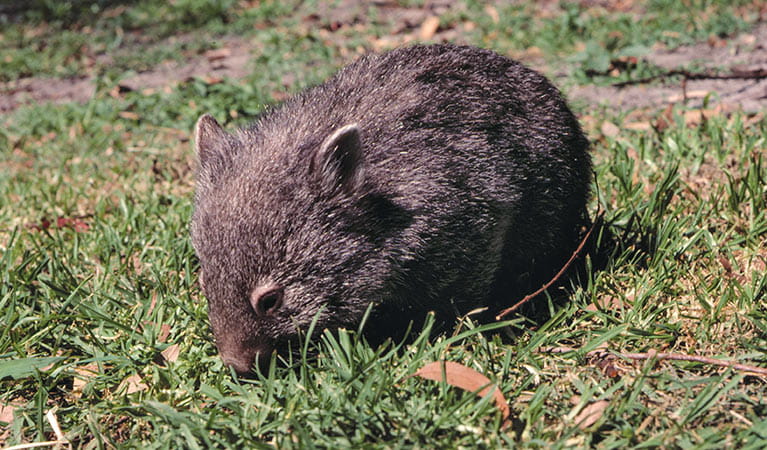
Bare-nosed wombat (Vombatus ursinus)
A large, squat marsupial, the Australian bare-nosed wombat is a burrowing mammal found in coastal forests and mountain ranges across NSW and Victoria. The only other remaining species of wombat in NSW, the endangered southern hairy-nosed wombat, was considered extinct until relatively recently.
-

Yellow-tailed black cockatoo (Calyptorhynchus funereus)
The yellow-tailed black cockatoo is one of the largest species of parrot. With dusty-black plumage, they have a yellow tail and cheek patch. They’re easily spotted while bird watching, as they feed on seeds in native forests and pine plantations.
-
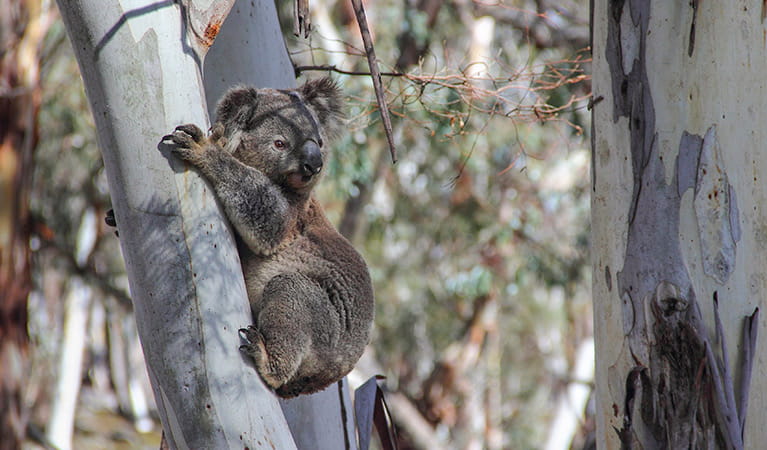
Koala (Phascolarctos cinereus)
One of the most renowned Australian animals, the tree-dwelling marsupial koala can be found in gum tree forests and woodlands across eastern NSW, Victoria and Queensland, as well as in isolated regions in South Australia. With a vice-like grip, this perhaps most iconic but endangered Australian animal lives in tall eucalypts within a home range of several hectares.
Plants
-
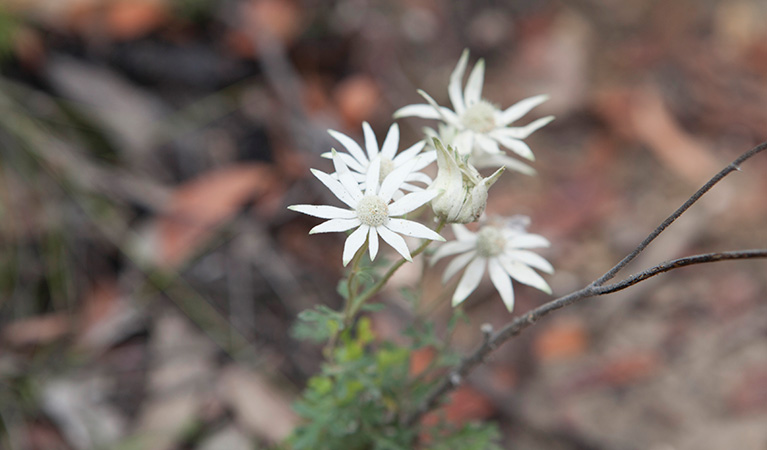
Flannel flower (Actinotus helianthi)
The delicate flannel flower is so named because of the soft woolly feel of the plant. Growing in the NSW south coast region, extending to Narrabri in the Central West and up to south-east Queensland, its white or pink flowers bloom all year long, with an extra burst of colour in the spring.
-
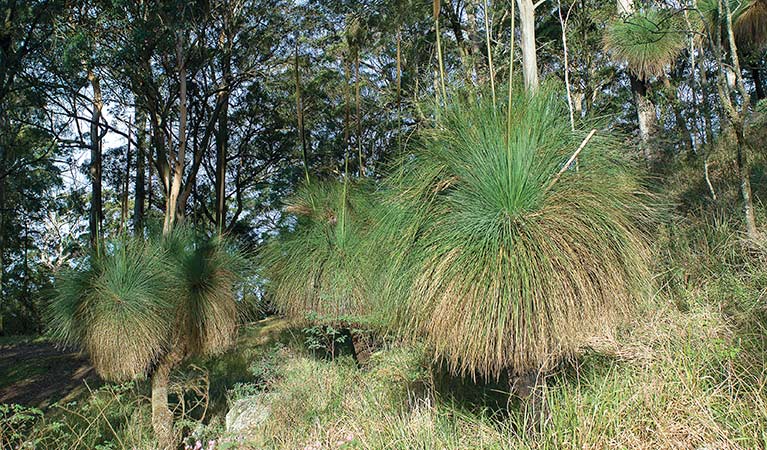
Grass tree (Xanthorrea spp.)
An iconic part of the Australian landscape, the grass tree is widespread across eastern NSW. These Australian native plants have a thick fire-blackened trunk and long spiked leaves. They are found in heath and open forests across eastern NSW. The grass tree grows 1-5m in height and produces striking white-flowered spikes which grow up to 1m long.
-
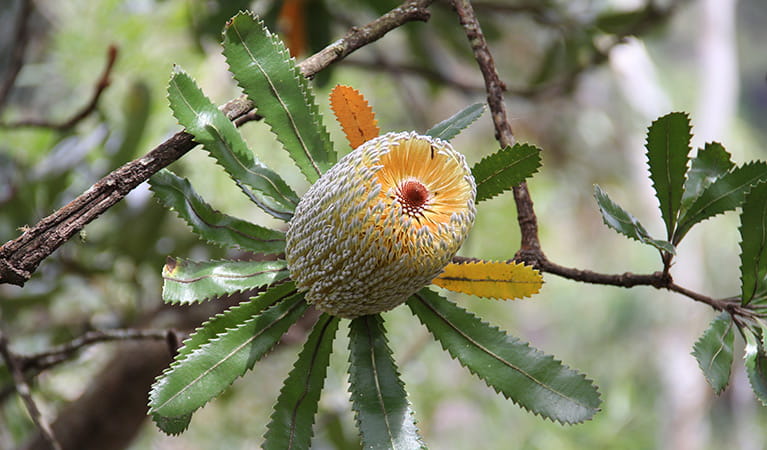
Old man banksia (Banksia serrata)
Hardy Australian native plants, old man banksias can be found along the coast, and in the dry sclerophyll forests and sandstone mountain ranges of NSW. With roughened bark and gnarled limbs, they produce a distinctive cylindrical yellow-green banksia flower which blossoms from summer to early autumn.
-
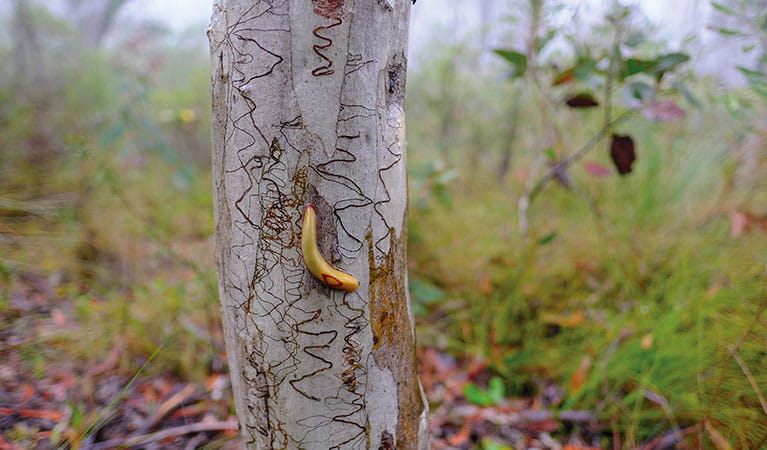
Scribbly gum (Eucalyptus haemastoma)
Easily identifiable Australian native plants, scribbly gum trees are found throughout NSW coastal plains and hills in the Sydney region. The most distinctive features of this eucalypt are the ‘scribbles’ made by moth larva as it tunnels between the layers of bark.
-
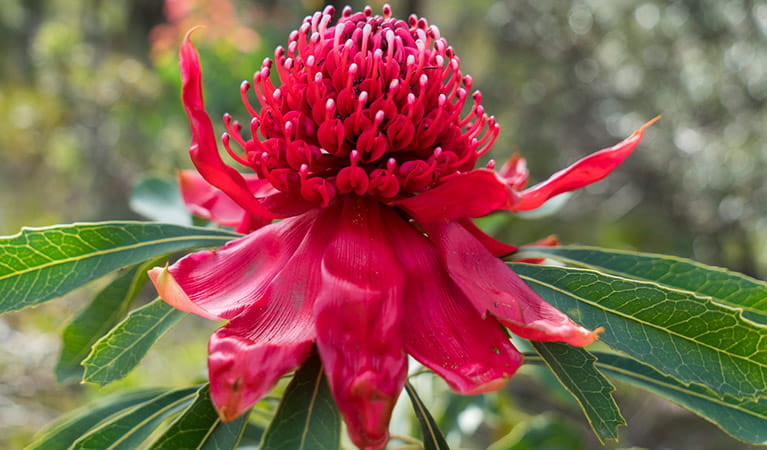
Waratah (Telopea speciosissima)
The beautiful waratah is not only the NSW floral emblem, it's also one of the best-known Australian native plants. This iconic Australian bush flower can be found on sandstone ridges around Sydney, in nearby mountain ranges and on the NSW South Coast. The waratah has a vibrant crimson flowerhead, measuring up to 15cm across, and blossoms in spring.