Overview
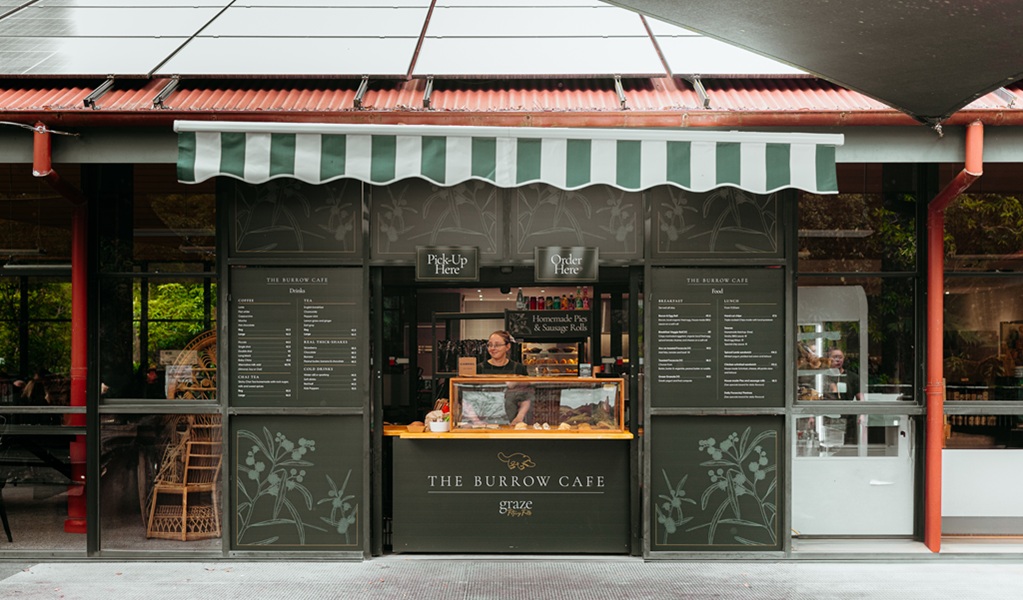
Enjoy coffee, tea, handmade pies and pastries at The Burrow Café in Fitzroy Falls Visitor Centre. Then stroll the boardwalk to see a waterfall during your Southern Highlands road trip between Moss Vale and Kangaroo Valley.
- Type
- Cafes and kiosks
- Where
- 1301 Nowra Road, Fitzroy Falls, NSW, 2577 - in Morton National Park in South Coast, Country NSW
- Accessibility
- Easy
- Entry fees
- Park entry fees apply
- Opening times
8am to 3pm, Thursday to Sunday and public holidays (excluding Christmas Day). Hours can vary.
- Please note
There is limited mobile phone reception in the area.
Whether you’re a Southern Highlands explorer or a local, don’t miss a stop at The Burrow Café in Fitzroy Falls Visitor Centre. The seasonal menu includes locally roasted coffee and delicious hand-made pies, pastries, focaccias and cakes baked fresh daily. It’s ideal for breakfast, lunch or a snack.
The Burrow Café is fully wheelchair-accessible, as is the short boardwalk to view a waterfall at Fitzroy Falls lookout.
Friendly café staff welcome you catching up with friends, hosting an event, or simply relishing the pleasure of a quiet coffee surrounded by ancient eucalyptus trees.
The café is an ideal starting point for passing cyclists and keen hikers seeking a fortifying lunch before a challenging walk along West Rim walking track or East Rim and Wildflower walking tracks.
Drop in to chat with our staff in the adjoining Fitzroy Falls Visitor Centre and learn about Morton National Park and the unique birds and wildlife in this special place.
Also see
-
Fitzroy Falls Visitor Centre
The award-winning Fitzroy Falls Visitor Centre offers information on the region’s local Aboriginal culture, wildlife and birdwatching, in the Southern Highlands.
-
Fitzroy Falls lookout
Take a stroll along an elevated boardwalk to Fitzroy Falls lookout in Morton National Park. You’ll have stunning views of the cliffs and plateaus as you watch the falls cascade into the valley below.
-
West Rim walking track
Moderate West Rim walking track offers scenic waterfall views, ideal for families on a car tour of Morton National Park, in the Southern Highlands, near Robertson.
Local alerts
For the latest updates on fires, closures and other alerts in this area, see https://www.nationalparks.nsw.gov.au/things-to-do/cafes-and-kiosks/the-burrow-cafe/local-alerts
Park info
- in Morton National Park in the South Coast and Country NSW regions
Morton National Park is always open but may have to close at times due to poor weather or fire danger.
Parts of the south-eastern area of this park were once used for military training and may contain unexploded artillery shells. These areas have restrictions in place for your safety.
-
Park entry fees:
Fitzroy Falls: $4 per vehicle per day. Bundanoon area: $8 per vehicle per day. The park has pay machines - cash and cards accepted.
Buy annual pass.
Visitor info
All the practical information you need to know about The Burrow Cafe.
Getting there and parking
Fitzroy Falls is in the northern precinct of Morton National Park. To get there:
- From Moss Vale, drive 18km east along Nowra Road to Fitzroy Falls.
- From Nowra, drive 41km via Kangaroo Valley and Nowra Road.
- From Wollongong, drive 65km via Robertson along Illawarra Highway, Sheepwash Road onto Nowra Road.
- From Sydney, drive 137km via Hume Highway to Mittagong, then Bowral onto Sheepwash Road and Nowra Road.
- From Canberra, drive 174km via Hume and Illawarra highways to Moss Vale, then onto Nowra Road.
Road quality
- Sealed roads
Vehicle access
- 2WD vehicles
Weather restrictions
- All weather
Parking
Parking is available in a paved carpark at the visitor centre, including 2 accessible parking spots. Bus parking is available.
Park entry fee applies at the visitor centre carpark.
Facilities
Toilets
- The toilets are accessible for people with reduced mobility
- The nearest toilet facilities are 100m from the cafe.
- Flush toilets
Picnic tables
Carpark
Drinking water
Step-free access
- Step-free access to restaurant/cafe
- Step-free main entrance to the building
- Step-free outdoor pathways
Accessible doorways
- Accessible doorways, at least 850mm wide, with lever handles
Maps and downloads
Accessibility
Disability access level - easy
Prohibited
Pets
Pets and domestic animals (other than certified assistance animals) are not permitted. Find out which regional parks allow dog walking and see the pets in parks policy for more information.
Smoking
NSW national parks are no smoking areas.
Visitor centre
-
Fitzroy Falls Visitor Centre
1301 Nowra Road, Fitzroy Falls NSW 2577 - 9am to 4pm daily. Closed Christmas Day.
- 02 4887 8270
Learn more
The Burrow Cafe is in Morton National Park. Here are just some of the reasons why this park is special:
A rugged beauty

Morton National Park envelops you in its fascinating landscape. Roam through rainforest on the Kangaroo Valley escarpment. Or relax on your picnic blanket, shaded by tall eucalyptus trees - the park has everything from Sydney peppermint to spotted gum and the rare Pigeon House Ash. The park's geological features are equally captivating. Detect different rock types in the cliff face, or find a good vantage point and gaze at the plateau carved with deep gorges. Absorbing the gorges sheer size, coupled with their interesting terraced appearance, can keep you occupied for hours.
- Badgerys Spur walking track Badgerys Spur walking track in Morton National Park offers a steep and challenging hike on the edge of Ettrema Wilderness Area, finishing on the banks of Shoalhaven River.
- Big canoe tour in Morton National Park Grab your friends and take to the waterways of Morton National Park on a guided canoeing tour with Valley Outdoors. You’ll cruise on lakes and rivers in a 9-metre voyageur canoe.
- Castle summit guided overnight hike Conquer the Castle summit on this challenging overnight bushwalk with Epiphany Tours in Morton National Park. You’ll hike through remote landscapes and camp under the stars.
- Granite Falls walking track The easy Granite Falls walking track in Morton National Park, near Nowra, offers scenic waterfall views with springtime wildflowers. Enjoy a picnic by the lookout.
- Self-guided paddling experiences Leave the world behind and paddle away for half, full or multi-day river adventures along breathtaking gorges in Morton National Park with kayaks and canoes supplied by Kangaroo Valley Safaris.
Rich Aboriginal history

Morton National Park is the traditional Country of the Yuin people. Several hundred Aboriginal sites have been recorded here and there are likely many more. The park's imposing mountains, particularly Didthul, are particularly significant in Aboriginal mythology, as is the majestic Fitzroy Falls. The park's plateau and surrounding country also contain sites of great importance to Aboriginal people, whose occupation of the area dates back over 20,000 years.
- Fitzroy Falls Visitor Centre The award-winning Fitzroy Falls Visitor Centre offers information on the region’s local Aboriginal culture, wildlife and birdwatching, in the Southern Highlands.
- Then and now: Aboriginal culture Then and now: Aboriginal culture is a Stage 3 (Years 5-6) school excursion at Fitzroy Falls in Morton National Park, focusing on HSIE. Through story and creative expression, the life and culture of the local people are shared.
- Then and now: Aboriginal culture Then and now: Aboriginal culture is a Stage 1 (Years 1-2) school excursion in Morton National Park, focusing on HSIE. Through story and creative expression, the life and culture of the local people are shared.
- Then and now: Aboriginal culture Then and now: Aboriginal culture is a Stage 2 (Years 3-4) school excursion at Fitzroy Falls in Morton National Park, focusing on HSIE. Through story and creative expression, the life and culture of the local people are shared.
Teeming with wildlife

This massive park is a sanctuary for all kinds of wildlife. Rainforest and moist eucalypt forest support swamp wallabies, gliders, bush rats and long-nosed potoroos. Birdwatchers will be tickled pink with Morton's residents - satin bowerbirds, green catbirds and lyrebirds call the park home, while eagles and falcons hover overhead. You could be fortunate enough to see an endangered ground parrot in the heath. And, if it really is your lucky day, maybe you'll meet a platypus or long-necked tortoise in one of the rivers.
- Canoes, cool-climate wines and canapés Indulge your taste buds with gourmet food and wine on this enjoyable guided excursion with Wildfest. It’s a great way to reconnect with nature along magical waterways in Morton National Park, near Kangaroo Valley.
- East Rim and Wildflower walking tracks The East Rim and Wildflower walking tracks offer awe inspiring views of the Southern Highlands. Starting from Fitzroy Falls Visitor Centre, wind your way through nature on these connecting tracks.
- Mannings lookout For spectacular cliff-top views over Kangaroo Valley, Mannings lookout offers great birdwatching on a family driving route through the NSW Southern Highlands, in Morton National Park.
- Pigeon House Mountain Didthul picnic area Pigeon House Mountain Didthul picnic area offers basic facilities as well as terrific birdwatching and a walking track up the mountain to a scenic lookout.
- Walking with wombats luxury excursions Even if you're short on time, you can have it all on this tour with Perfect Day Sydney. This unforgettable day out includes a magical bushwalk, visits to waterfalls and other scenic sights, and the chance for wombat encounters during a relaxing twilight dinner.
Plants and animals protected in this park
Animals
-

Yellow-tailed black cockatoo (Calyptorhynchus funereus)
The yellow-tailed black cockatoo is one of the largest species of parrot. With dusty-black plumage, they have a yellow tail and cheek patch. They’re easily spotted while bird watching, as they feed on seeds in native forests and pine plantations.
-
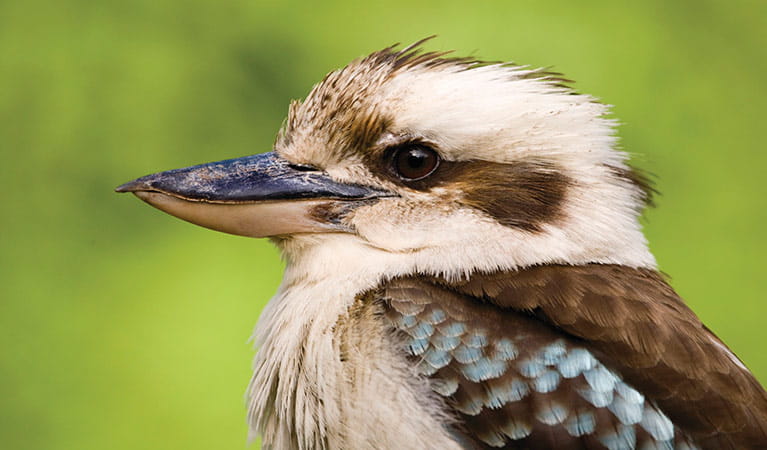
Kookaburra (Dacelo novaeguineae)
Of the 2 species of kookaburra found in Australia, the laughing kookaburra is the best-known and the largest of the native kingfishers. With its distinctive riotous call, the laughing kookaburra is commonly heard in open woodlands and forests throughout NSW national parks, making these ideal spots for bird watching.
-

Spotted-tailed quoll (Dasyurus maculatus)
The spotted-tailed quoll is the largest remaining carnivorous marsupial on the Australian mainland. It’s protected as a vulnerable species in NSW.
-
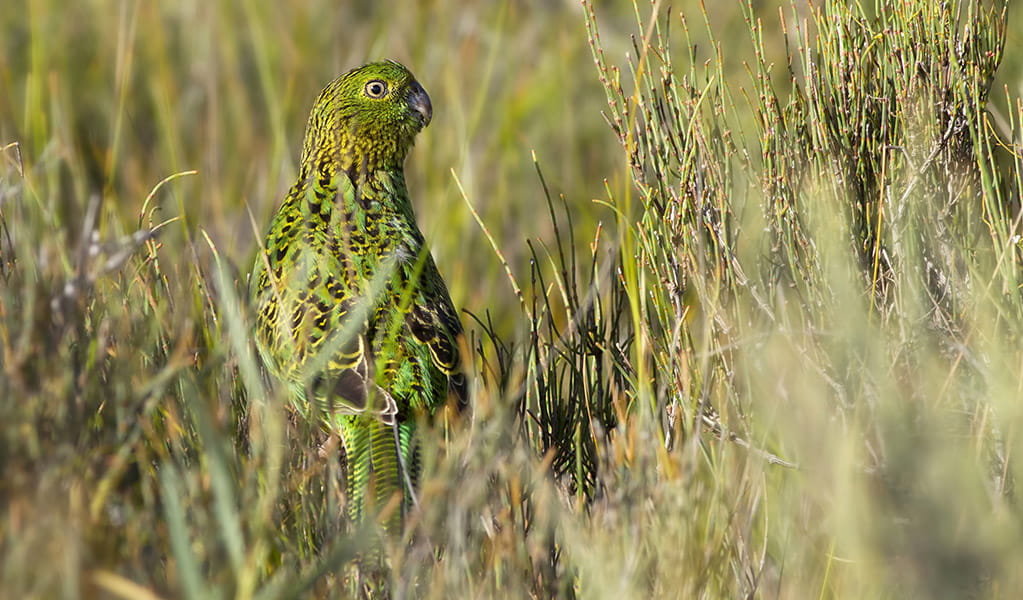
Eastern ground parrot (Pezoporus wallicus wallicus)
The eastern ground parrot is a beautiful, ground-dwelling native bird that lives in low heathland habitat along the NSW North and South coasts and escarpments. It’s listed as a vulnerable species in NSW.
Plants
-
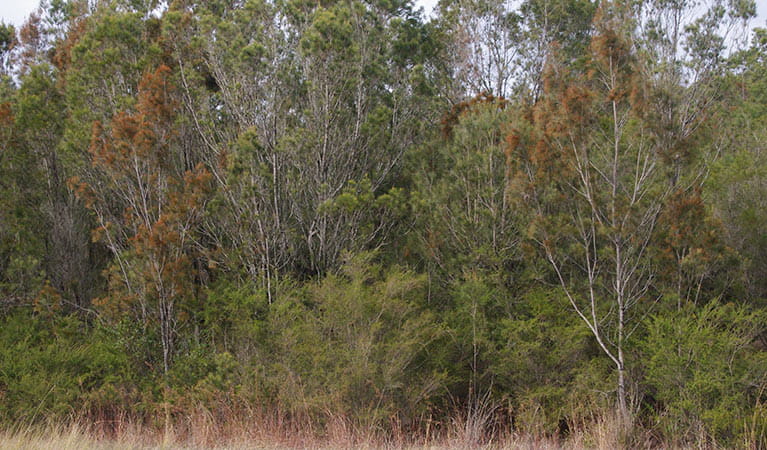
Black sheoak (Allocasuarina littoralis)
The black sheoak is one of a number of casuarina species found across the east coast of Australia and nearby tablelands. Growing to a height of 5-15m, these hardy Australian native plants can survive in poor or sandy soils. The barrel-shaped cone of the black sheoak grows to 10-30mm long.
-
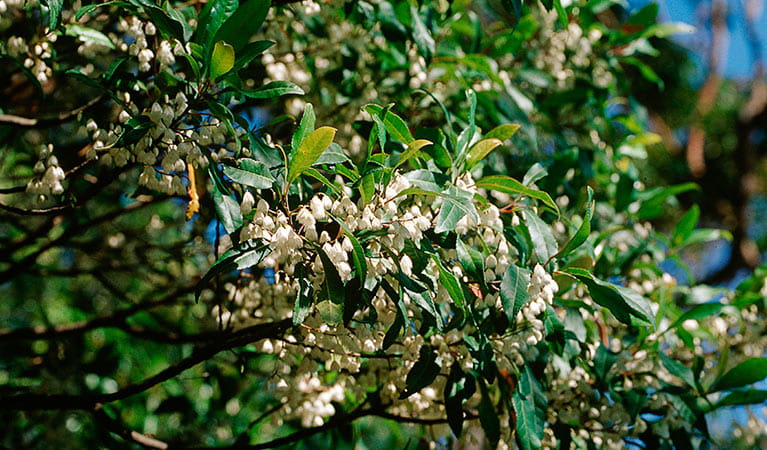
Blueberry ash (Elaeocarpus reticulatus)
The blueberry ash is a rainforest shrub which produces blue olive-shaped berries and spectacular bell-shaped flowers, which often appear on the plant together. It is a tall slender shrub or small tree found in rainforest, tall eucalypt forest and coastal bushland in eastern NSW, south-east Queensland and Victoria.
-
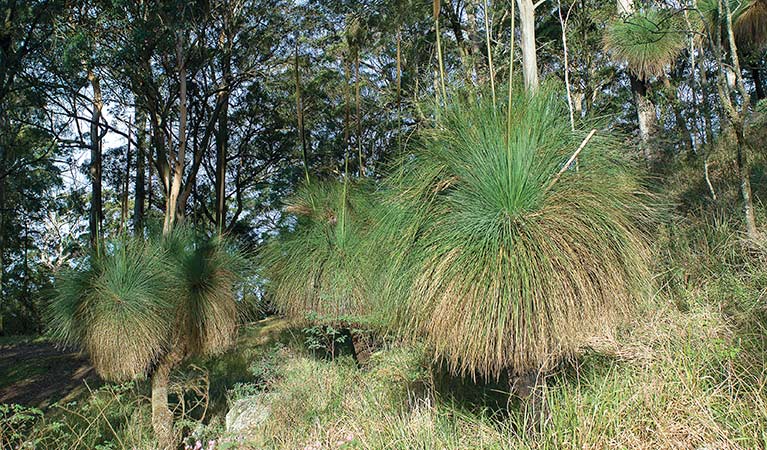
Grass tree (Xanthorrea spp.)
An iconic part of the Australian landscape, the grass tree is widespread across eastern NSW. These Australian native plants have a thick fire-blackened trunk and long spiked leaves. They are found in heath and open forests across eastern NSW. The grass tree grows 1-5m in height and produces striking white-flowered spikes which grow up to 1m long.