Horton Falls National Park
Open, check current alerts

Overview
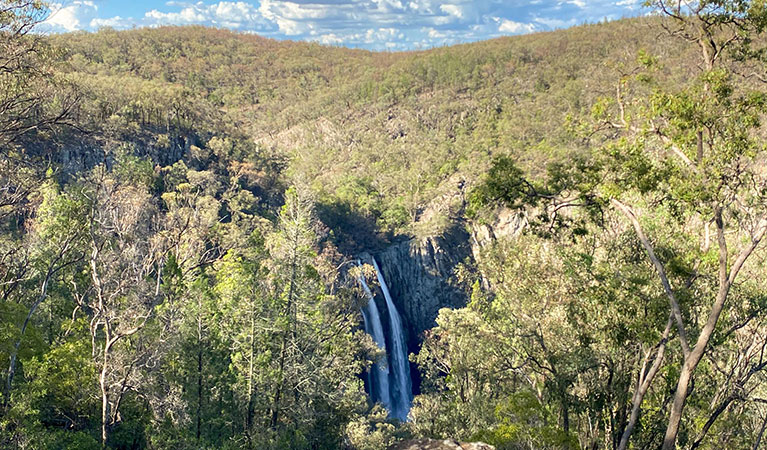
Visit Horton Falls National Park, tucked away on the eastern foothills of the Nandewar Range. About 40mins from Barraba, you’ll be treated to spectacular waterfall and rugged cliff views.
Read more about Horton Falls National Park
A great daytrip from Tamworth, Horton Falls National Park protects the headwaters of the Gwydir River. It’s divided by the tranquil Horton River, characterised by pools, cascades, gorges and the dramatic Horton Falls that drop 83m.
Your best chance to view these majestic falls is spring through to autumn, when the weather is warmer and the river is flowing after local rainfall. It’s also a great time to see vibrant wildflower displays of native bluebells and guinea flowers.
If you’re a keen photographer, make the short 100m stroll to Horton Falls lookout. Here, you can capture the perfect shot of the Horton River cascading into the deep valley below. If the sight of all this water makes you keen for a cool, refreshing dip, take a scenic 250m walk to the magical Upper Falls, where water cascades over small rocky cliffs into a delightful swimming hole.
Keep your eyes peeled for the many bird species that reside here. You might spot turquoise parrots feeding on grasses or eastern yellow robins sitting on low branches in the woodlands. At the end of an action-packed day, hunker down at the rustic Horton Falls campground.
Local alerts
For the latest updates on fires, closures and other alerts in this area, see https://www.nationalparks.nsw.gov.au/visit-a-park/parks/horton-falls-national-park/local-alerts
Contact
- in the Country NSW region
Horton Falls National Park is always open but may have to close at times due to poor weather or fire danger.
-
-
Narrabri office
02 6792 7300
Contact hours: Monday to Friday, 8.30am to 4.30pm. - Level 1, 100 Maitland Street, Narrabri NSW 2390. Accessible via Dewhurst Street.
-
Email: npws.barwon@environment.nsw.gov.au
-
Narrabri office
Visitor info
All the practical information you need to know about Horton Falls National Park.
Getting there and parking
Horton Falls National Park is in the New England region in northern NSW. To get there:
From Barraba:
- Drive about 40min west of Barraba
- Head west along Trevallyn Road, then turn left onto Mount Lindesay Road.
- Travel for 10km, then turn right onto Horton Falls Road.
- Continue for approximately 7km until you reach the park entrance.
From Narrabri:
- The reserve is about a 2hr drive east of Narrabri
- Travel east on Killarney Gap Road for 66km, then turn right onto Back Creek Road.
- Follow Back Creek Road for 17km and turn left onto Trevallyn Road
- Drive for 26km to the intersection of Mount Lindesay Road
- Travel for 10km along Mount Lindesay Road, then turn right onto Horton Falls Road.
- Continue for approximately 7km until you reach the park entrance.
From Tamworth:
- The reserve is about a 2hr drive north west of Tamworth
- Take Manilla Road north to Barraba for about 90km.
- Turn left onto Alice Street, continuing onto Trevallyn Road for about 20km.
- Turn right onto Horton Falls Road and continue for 7km until you reach the park entrance.
Road quality
- Mixture of sealed and unsealed roads
Vehicle access
- Most roads suitable for 2WD vehicles
Weather restrictions
- 4WD required in wet weather
Parking
Parking is available at Upper Falls picnic area and Horton Falls lookout.
Best times to visit
Autumn
This is one of the best times of year to visit the park, with ideal temperatures for bushwalking and camping.
Spring
A lovely time to enjoy picnicking, indulging in wildlife and nature photography, birdwatching, and bushwalking.
Summer
Escape the heat by heading into the park for a refreshing swim.
Winter
Enjoy the spectacular views under clear winter skies.
Facilities
Toilets
Picnic tables
Barbecue facilities
Maps and downloads
What's permitted
Camp fires and solid fuel burners
Campfires and solid fuel burners are permitted in the fire rings at Horton Falls campground and picnic area. Bring your own firewood.
Camping
Cycling
Fishing
A current NSW recreational fishing licence is required when fishing in all waters.
What's prohibited
Gathering firewood
Generators
Horses
Pets
Pets and domestic animals (other than certified assistance animals) are not permitted. Find out which regional parks allow dog walking and see the pets in parks policy for more information.
Smoking
NSW national parks are no smoking areas.
Learn more
Horton Falls National Park is a special place. Here are just some of the reasons why:
Plants and animals protected in this park
Animals
-

Yellow-tailed black cockatoo (Calyptorhynchus funereus)
The yellow-tailed black cockatoo is one of the largest species of parrot. With dusty-black plumage, they have a yellow tail and cheek patch. They’re easily spotted while bird watching, as they feed on seeds in native forests and pine plantations.
-
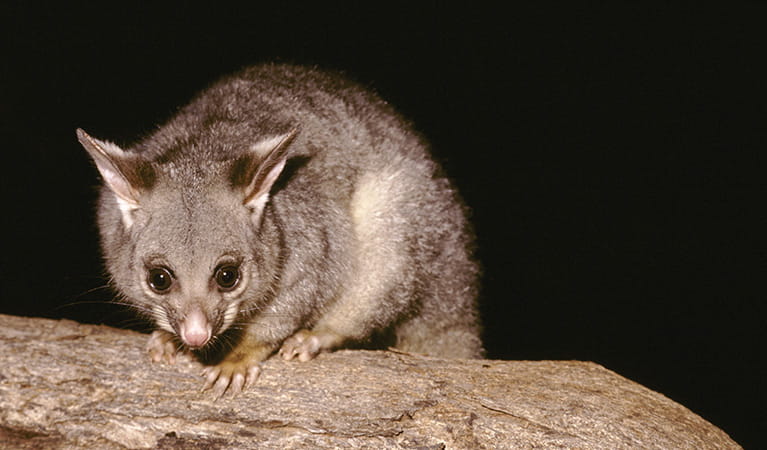
Common brushtail possum (Trichosurus vulpecula)
One of the most widespread of Australian tree-dwelling marsupials, the common brushtail possum is found across most of NSW in woodlands, rainforests and urban areas. With strong claws, a prehensile tail and opposable digits, these native Australian animals are well-adapted for life amongst the trees.
-
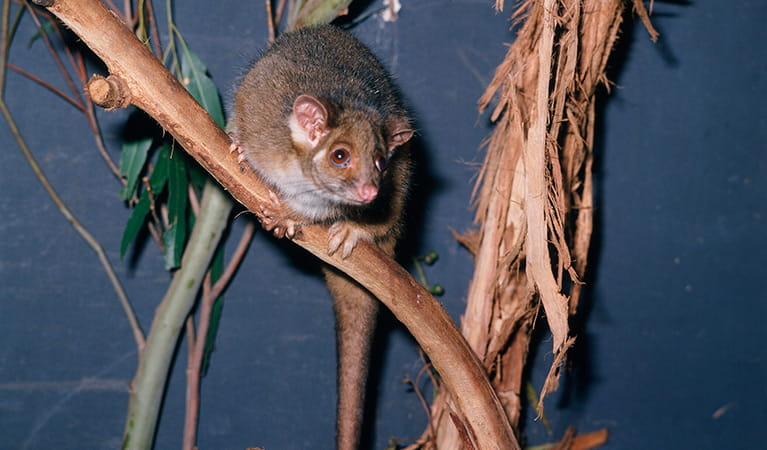
Common ringtail possum (Pseudocheirus peregrinus)
Commonly found in forests, woodlands and leafy gardens across eastern NSW, the Australian ringtail possum is a tree-dwelling marsupial. With a powerful tail perfectly adapted to grasp objects, it forages in trees for eucalypt leaves, flowers and fruit.
-
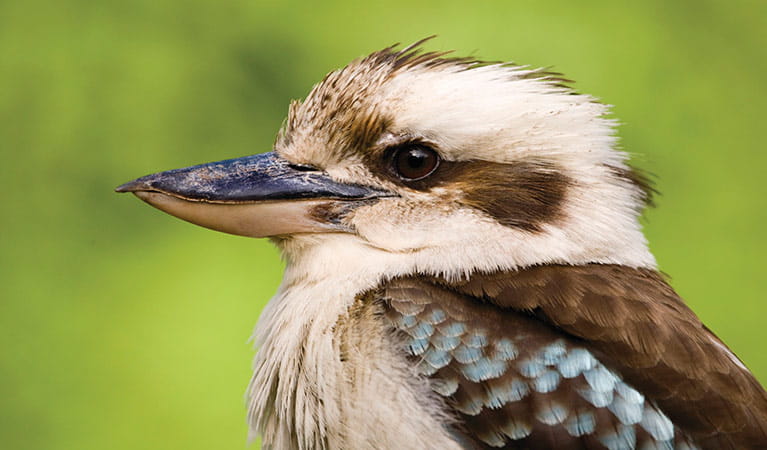
Kookaburra (Dacelo novaeguineae)
Of the 2 species of kookaburra found in Australia, the laughing kookaburra is the best-known and the largest of the native kingfishers. With its distinctive riotous call, the laughing kookaburra is commonly heard in open woodlands and forests throughout NSW national parks, making these ideal spots for bird watching.
-

Regent honeyeater (Anthochaera phrygia)
The regent honeyeater is a critically endangered native bird. Once widespread across south-eastern Australia, only around 250 to 350 birds remain in the wild, making it at risk of extinction.
-
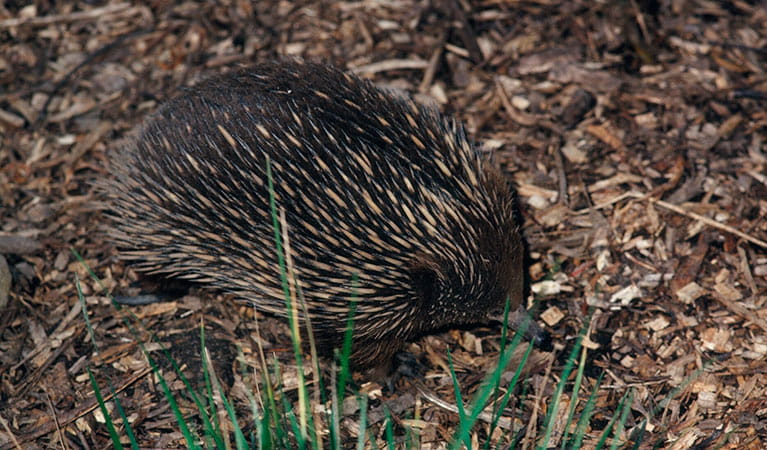
Short-beaked echidna (Tachyglossus aculeatus)
One of only 2 egg-laying mammals in the world, the short-beaked echidna is one of the most widespread of Australian native animals. Covered in spines, or quills, they’re equipped with a keen sense of smell and a tube-like snout which they use to break apart termite mounds in search of ants.
-
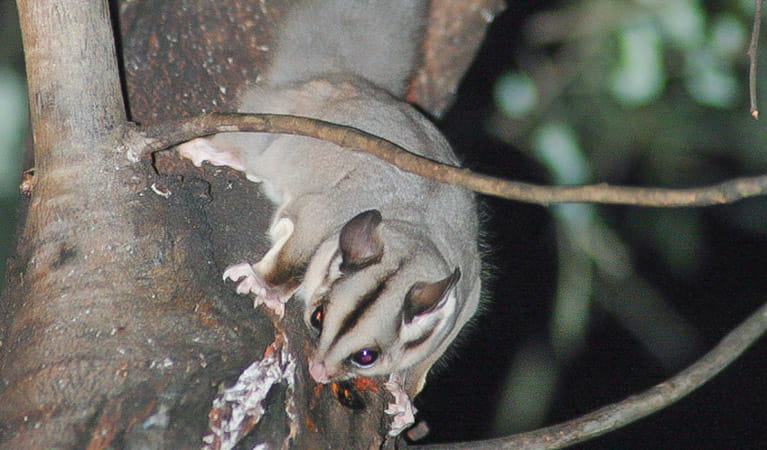
Sugar glider (Petaurus breviceps)
The sugar glider is a tree-dwelling Australian native marsupial, found in tall eucalypt forests and woodlands along eastern NSW. The nocturnal sugar glider feeds on insects and birds, and satisfies its sweet tooth with nectar and pollens.
-
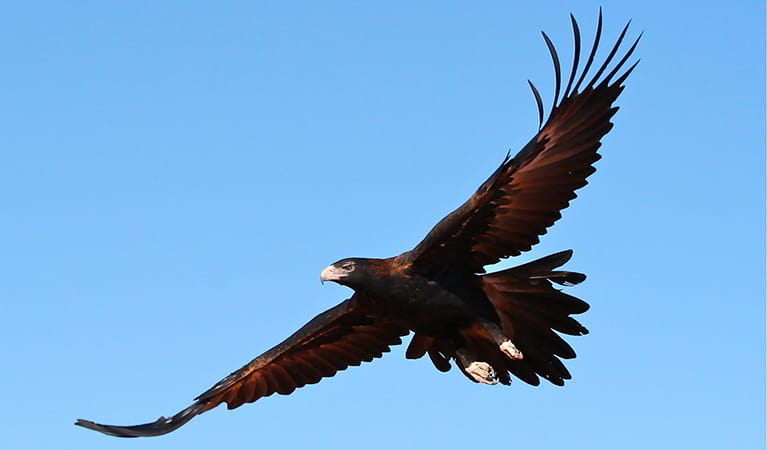
Wedge-tailed eagle (Aquila audax)
With a wingspan of up to 2.5m, the wedge-tailed eagle is Australia’s largest bird of prey. These Australian animals are found in woodlands across NSW, and have the ability to soar to heights of over 2km. If you’re bird watching, look out for the distinctive diamond-shaped tail of the eagle.
Plants
-
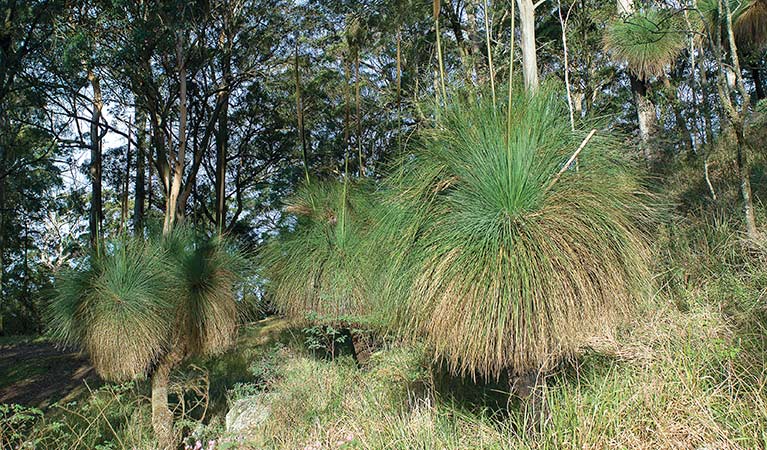
Grass tree (Xanthorrea spp.)
An iconic part of the Australian landscape, the grass tree is widespread across eastern NSW. These Australian native plants have a thick fire-blackened trunk and long spiked leaves. They are found in heath and open forests across eastern NSW. The grass tree grows 1-5m in height and produces striking white-flowered spikes which grow up to 1m long.
-
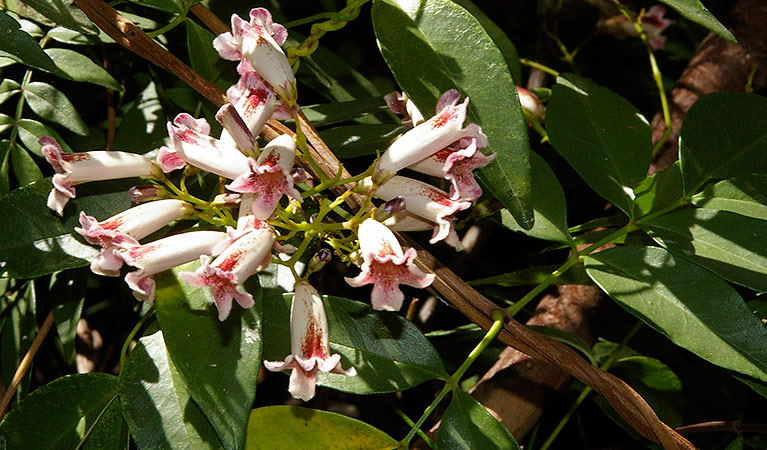
Wonga wonga vine (Pandorea pandorana)
The wonga wonga vine is a widespread vigorous climber usually found along eastern Australia. A variation of the plant occurs in the central desert, where it resembles a sprawling shrub. One of the more common Australian native plants, the wonga wonga vine produces bell-shaped white or yellow flowers in the spring, followed by a large oblong-shaped seed pod.
-
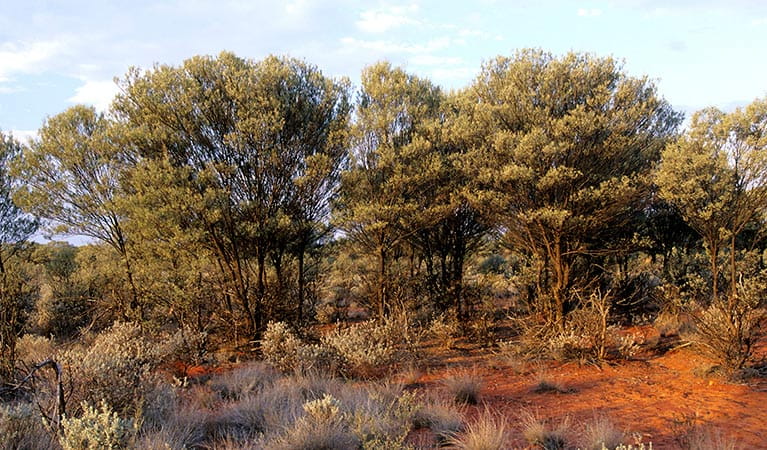
Mulga (Acacia aneura)
Mulga are hardy Australian native plants found throughout inland Australia. With an unusually long tap root, the mulga is able to withstand long periods of drought.
Environments in this park
What we're doing
Horton Falls National Park has management strategies in place to protect and conserve the values of this park. View the detailed park and fire management documents.