Murrumbidgee Valley Regional Park
Overview
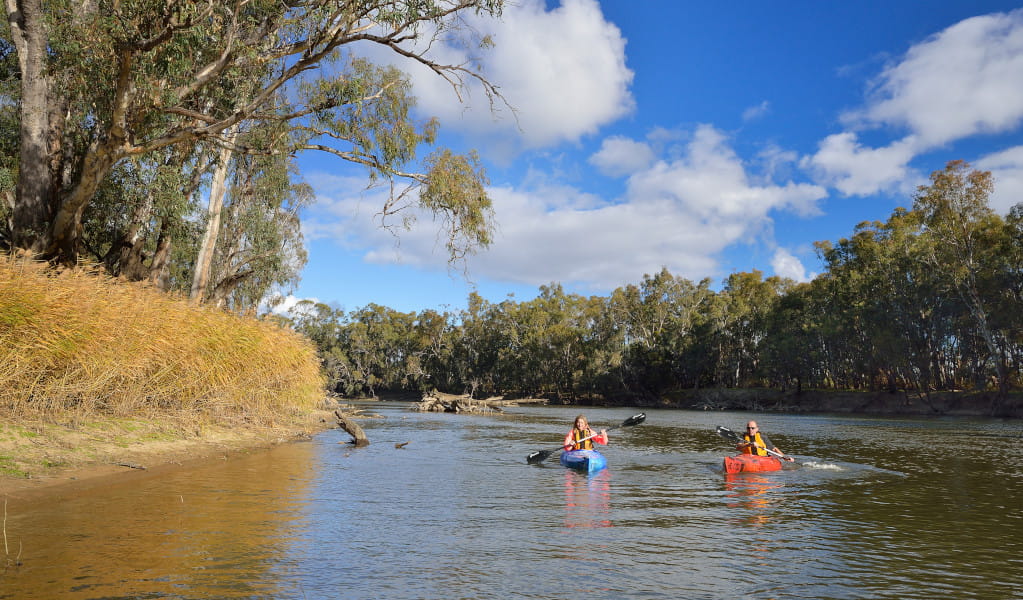
The dog-friendly Murrumbidgee Regional Park is a natural playground in river red gum country. Located near Narrandera and Darlington Point, enjoy riverside camping along the banks of the Murrumbidgee River.
Read more about Murrumbidgee Valley Regional Park
There’s plenty of space to spread out and find your little slice of river frontage in Murrumbidgee Regional Park. A beautiful pocket of bushland, you’ll enjoy a true bush experience while still being close to town. Popular with campers who don't want to leave their dogs at home, the sandy beaches and calm river are perfect for kayaking, boating and swimming. Try your luck fishing for redfin and bream or find a secluded spot to enjoy a good book and watch the world go by.
Murrumbidgee Valley Regional Park is part of the longest continuous tract of river red gum forest in the world. These unique red gum forests provide a safe haven to koalas which you may spot in their branches. Among the majestic trees, birdwatchers might catch a glimpse of scared kingfishers, barking owls and threatened superb parrots.
You can visit for a daytrip to enjoy a barbecue or picnic and some walking, but it’s better to stay longer to enjoy all that the park has to offer. Follow the river as it meanders through the bush—you really are spoilt for camping spots.
Local alerts
For the latest updates on fires, closures and other alerts in this area, see https://www.nationalparks.nsw.gov.au/visit-a-park/parks/murrumbidgee-valley-regional-park/local-alerts
Contact
- in the Murray-Riverina region
Murrumbidgee Valley Regional Park is always open but may have to close at times due to poor weather or fire danger.
-
-
Moama office
03 5483 9100
Contact hours: Monday to Friday, 9am to 4pm. Closed 12pm to 1pm. - Factory 5, Lot 8 Bowlan Road, Moama NSW 2731
-
Email: npws.riverina@environment.nsw.gov.au
-
Moama office
-
-
Griffith office
02 6966 8100
Contact hours: Monday to Friday, 9am to 4pm. Closed 1pm to 2pm. - 200 Yambil Street, Griffith NSW 2680
-
Email: npws.riverina@environment.nsw.gov.au
-
Griffith office
Visitor info
All the practical information you need to know about Murrumbidgee Valley Regional Park.
Learn more
Murrumbidgee Valley Regional Park is a special place. Here are just some of the reasons why:
Plants and animals protected in this park
Animals
-

Swamp wallaby (Wallabia bicolor)
The swamp wallaby, also known as the black wallaby or black pademelon, lives in the dense understorey of rainforests, woodlands and dry sclerophyll forest along eastern Australia. This unique Australian macropod has a dark black-grey coat with a distinctive light-coloured cheek stripe.
-
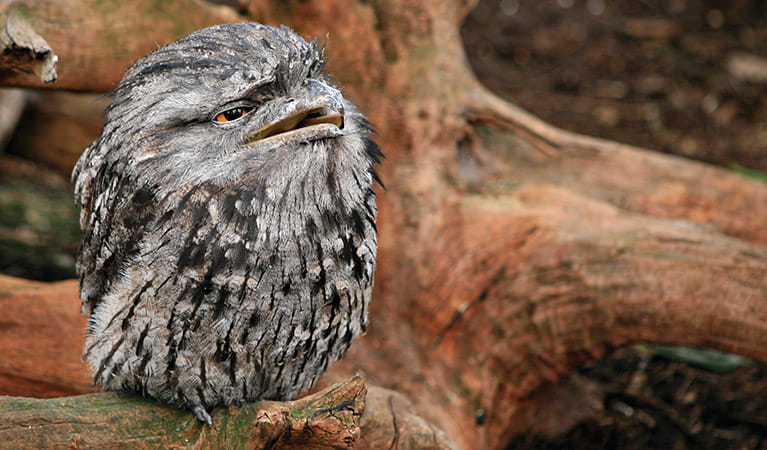
Tawny frogmouth (Podargus strigoides)
Found throughout Australia, the tawny frogmouth is often mistaken for an owl due to its wide, powerful beak, large head and nocturnal hunting habits. The ‘oom oom oom’ call of this native bird can be heard echoing throughout a range of habitats including heath, woodlands and urban areas.
-
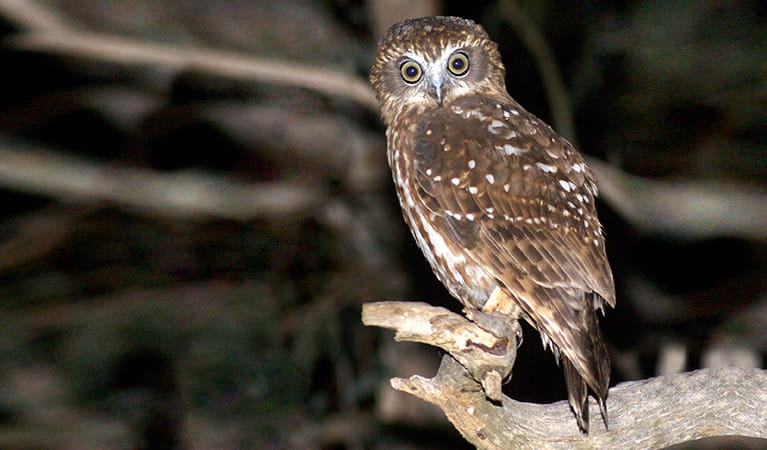
Southern boobook (Ninox novaeseelandiae)
The southern boobook, also known as the mopoke, is the smallest and most common native owl in Australia. With a musical 'boo-book' call that echoes through forests and woodlands, the southern boobook is a great one to look out for while bird watching.
Plants
-
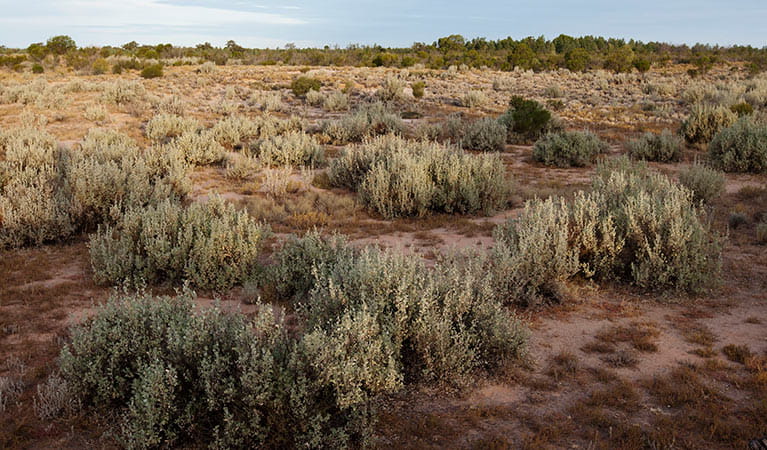
Saltbush (Atriplex nummularia)
A hardy Australian native plant, the saltbush is a small spreading shrub that can withstand dry salty soils such as those found in the desert plains of western NSW. It is grey-white in colour and has small spear-shaped succulent leaves. It flowers from December to April.
-
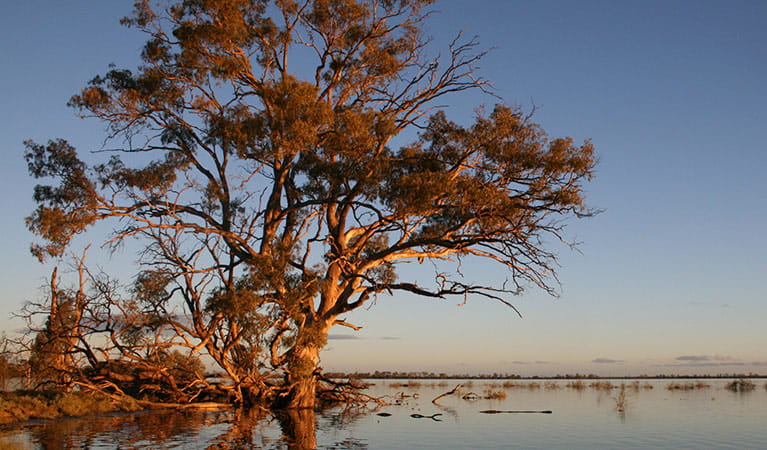
River red gum (Eucalpytus camaldulensis)
Australian native plants, majestic river red gum trees are widespread across Australian inland river systems. The river red gum is a dominant tree species of the Murray-Darling basin which spans NSW, Queensland and Victoria. This iconic native eucalypt grows to a height of 30m and is thought to have a lifespan up to 500-1000 years.
Environments in this park
What we're doing
General enquiries
- National Parks Contact Centre
- 7am to 7pm daily
- 1300 072 757 (13000 PARKS) for the cost of a local call within Australia excluding mobiles
- parks.info@environment.nsw.gov.au
Contact
- in the Murray-Riverina region
Murrumbidgee Valley Regional Park is always open but may have to close at times due to poor weather or fire danger.
-
-
Moama office
03 5483 9100
Contact hours: Monday to Friday, 9am to 4pm. Closed 12pm to 1pm. - Factory 5, Lot 8 Bowlan Road, Moama NSW 2731
-
Email: npws.riverina@environment.nsw.gov.au
-
Moama office
-
-
Griffith office
02 6966 8100
Contact hours: Monday to Friday, 9am to 4pm. Closed 1pm to 2pm. - 200 Yambil Street, Griffith NSW 2680
-
Email: npws.riverina@environment.nsw.gov.au
-
Griffith office