
Hazard reduction program
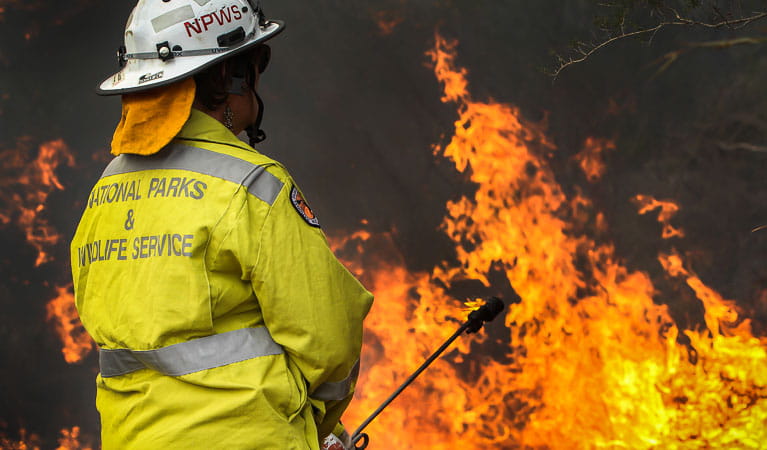
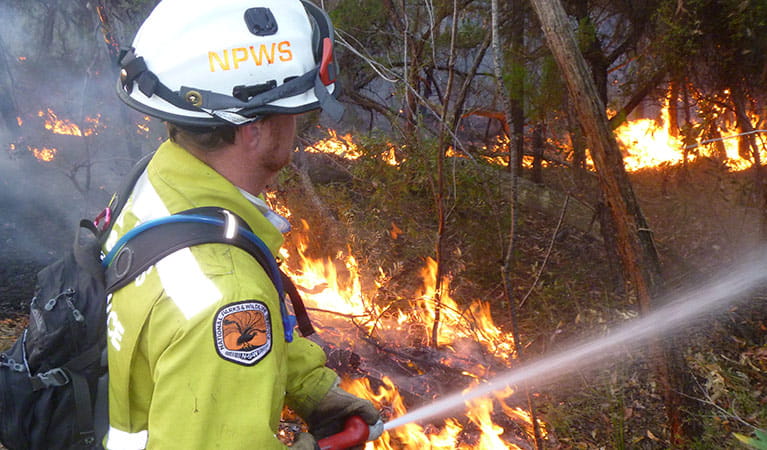
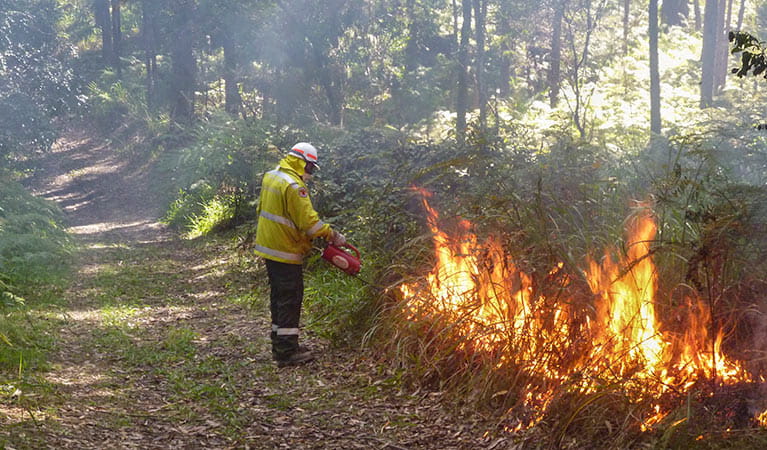
Managing fire-prone NSW national parks requires a multi-layered approach, including fire planning, community education, and fuel management. When it comes to reducing risks from fire-prone fuels, NSW National Parks and Wildlife Service (NPWS) conducts planned hazard reduction activities like mowing and controlled burning to assist in the protection of life, property and the community.
Read more about Hazard reduction program
A hazard reduction burn is a fire ignited and controlled to burn a predetermined area under specific fuel and weather conditions to attain planned fuel management outcomes. Hazard reduction burning, sometimes called controlled burning or prescribed burning, is completed in strategic areas of a park. This reduces fire-prone fuel hazards which can moderate fire behaviour and aid fire suppression efforts in the right weather conditions. However, when fires weather is extreme or catastrophic, areas treated by hazard reduction burns may have limited influence on fire behaviour driven largely by the weather.
In addition to prescribed burning, the NPWS hazard reduction program includes mechanical works, such as slashing and mowing. It’s important to remember planned hazard reduction isn’t the same as back-burning, which is a fire suppression tactic used during active bushfires.
While it’s vital that prescribed burning is done for the protection of the whole community, these burns can have temporary impact through smoke, road and park closures. We keep the community updated via our Alerts page, and offer several informational videos about the hazard reduction program, including videos on capability and training, and relationships with the community.