Illawarra Escarpment mountain bike volunteers
Illawarra Escarpment State Conservation Area
Open, check current alerts


Overview
The Illawarra mountain bike network is a popular mountain bike network in Illawarra Escarpment State Conservation Area, near Wollongong. If cleaning up the garden is one of your strengths, volunteer today to help us maintain the trails.
- Work
- Maintenance tracks and trails
- When
First Saturday of the month, all year around
- Accessibility
- Hard
- Grade
- Hard
Volunteers will work in Illawarra Escarpment State Conservation Area. You'll maintain trail surfaces, clean drains, reshape features and clear fallen leaves and vegetation.
You don’t need special skills or knowledge – we'll give you training and instructions on tasks on the days you volunteer. The work requires a reasonable level of fitness, and you can expect to be working in steep and uneven terrain. First aid training is also desirable.
This a great opportunity to be involved in and contribute to the mountain biking community in the Illawarra. You’ll make new friends working with like-minded people, and you’ll learn about the Illawarra escarpment, a 30-million-year-old formation with a variety of different forest life. You'll be in the fresh air in a beautiful environment doing satisfying and much-needed work on the trails.
Wear long sleeves, long pants and bring a hat and sun protection when you volunteer.
Local alerts
For the latest updates on fires, closures and other alerts in this area, see https://www.nationalparks.nsw.gov.au/things-to-do/volunteer-activities/illawarra-escarpment-mountain-bike-volunteers/local-alerts
Park info
- in Illawarra Escarpment State Conservation Area in the South Coast region
Illawarra Escarpment State Conservation Area is always open but may have to close at times due to poor weather or fire danger. However, it is recommended that bushwalking only be undertaken during daylight hours because of the presence of cliff edges and other hazards.
Visitor info
All the practical information you need to know about Illawarra Escarpment mountain bike volunteers.
Getting there and parking
Get driving directions
Kembla mountain bike trails are in Illawarra Escarpment State Conservation Area, Dharawal Country, near Wollongong. The main trail entrance is located approximately 25 mins west of Wollongong city centre.
Note: Roadworks on Harry Graham Drive until November 2025
- Wollongong City Council is carrying out essential roadworks on Harry Graham Drive until November 2025.
- To access the green trails (only) main trail carpark follow Mount Keira Road to Harry Graham Drive, where limited informal parking is available.
- If you don't need green trails and only wish to ride blue and black trails, park at the main northern carpark via Mount Keira Road and Harry Graham Drive.
The best way to reach the trail is by private transport.
Parking
There is free parking off Harry Graham Drive next to the motor cross club.
Maps and downloads
Accessibility
Disability access level - hard
Wheelchair-users can access this area with some difficulty.
Learn more
Illawarra Escarpment mountain bike volunteers is in Illawarra Escarpment State Conservation Area. Here are just some of the reasons why this park is special:
200 million years and counting
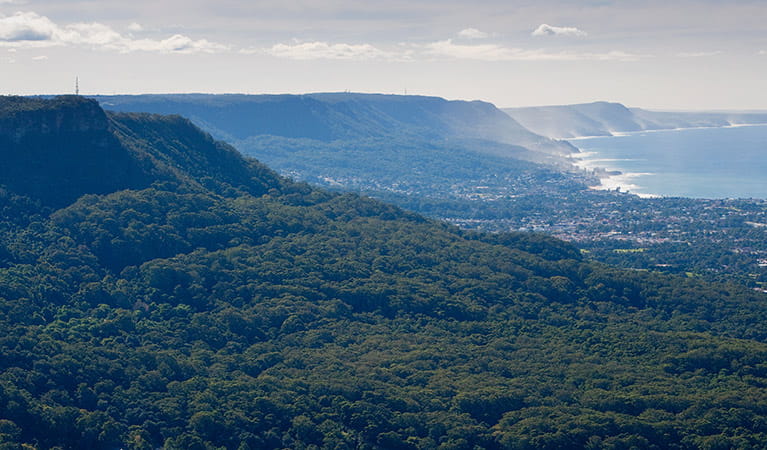
The 500-metre-high Illawarra Escarpment provides a dramatic backdrop to the city of Wollongong and spans 200 million years of geological history. The escarpment is so notable, it's currently listed as a 'Scenic Landscape of State-wide Significance' on the Register of the National Trust of Australia (NSW).
- Forest walk to Sublime Point track Combining several hiking tracks, this extended day walk is one of the region’s best, taking in scenic views of the coast and Sydney, with access to nearby forest picnic spots.
- Mount Keira Ring track Encircling Mount Keira, the ring track passes through the varied terrains and forests of the Illawarra Escarpment, starting and finishing in a perfect picnic spot.
- Sublime Point walking track For a challenging walk through rainforest, Sublime Point walking track offers great birdwatching and scenic views across Illawarra Escarpment State Conservation Area.
Going bush
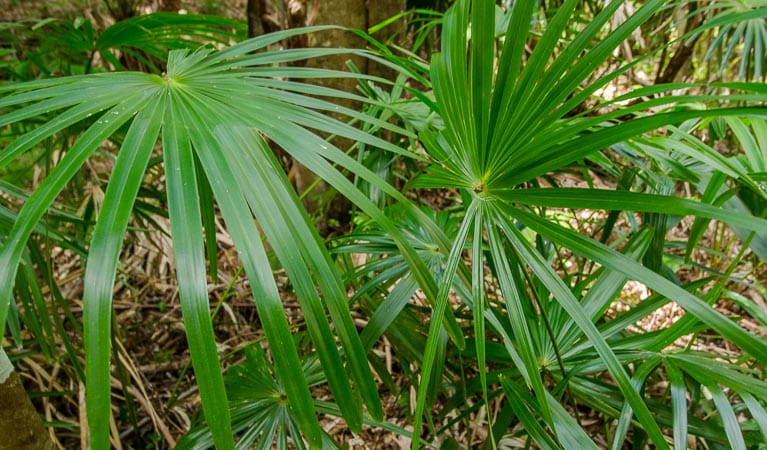
The Illawarra Escarpment contains the most extensive area of rainforest in the Sydney basin and forms a crucial corridor between Royal National Park and the South Coast. The area acts as an important refuge for species that are affected by environmental disturbances such as development and bushfires. There are currently 12 threatened animal species in the area. You might even spot a lyrebird, the wildlife emblem of the National Parks and Wildlife Service.
- Byarong Park picnic area Easily accessible and featuring all the facilities needed to enjoy a barbecue, the popular Byarong Park picnic area also offers walking track access and birdwatching.
- Forest walk to Sublime Point track Combining several hiking tracks, this extended day walk is one of the region’s best, taking in scenic views of the coast and Sydney, with access to nearby forest picnic spots.
How it all began
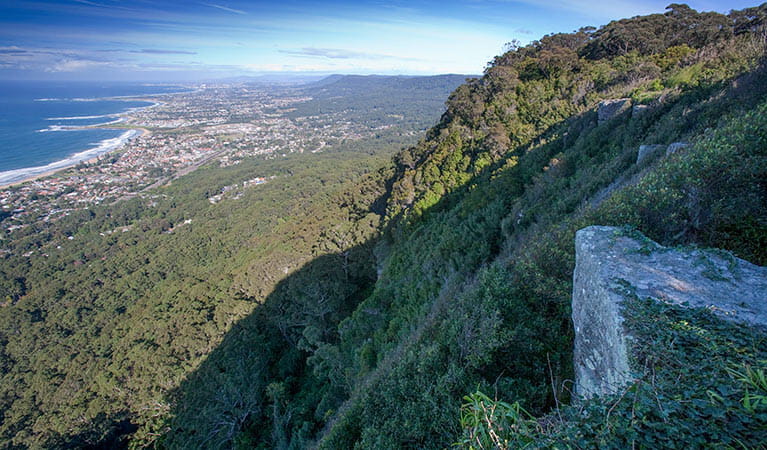
The Illawarra Escarpment lands were occupied by the Wodi Wodi Aboriginal people for 20,000 years. As such, they are a source of cultural legends and of continuing spiritual significance: Mount Kembla and Mount Keira, for example, feature in a number of creation stories. The conversation area also contains traditional routes of travel between the coastal plain and the plateau.
- Mount Kembla Ring track Taking in a significant Aboriginal site, local heritage, stunning scenic rainforest and a notable landmark, the Mount Kembla Ring track offers a taste of everything.
Our colonial past
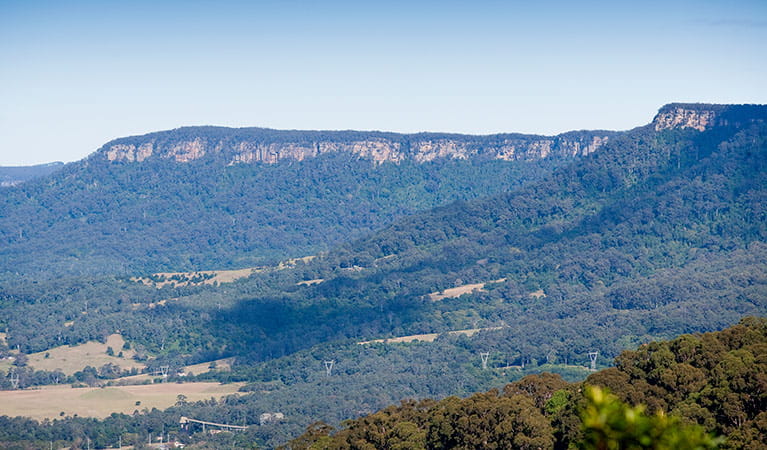
The Illawarra Escarpment area is full of important local heritage, including colonial roads like the ones constructed by Surveyor-General Thomas Mitchell around 1834. Some were even built by convicts. Keep your eyes open for buildings, portals, rail tracks and other features from former farming and coal mining.
- Mount Keira Ring track Encircling Mount Keira, the ring track passes through the varied terrains and forests of the Illawarra Escarpment, starting and finishing in a perfect picnic spot.
Weekend city escape
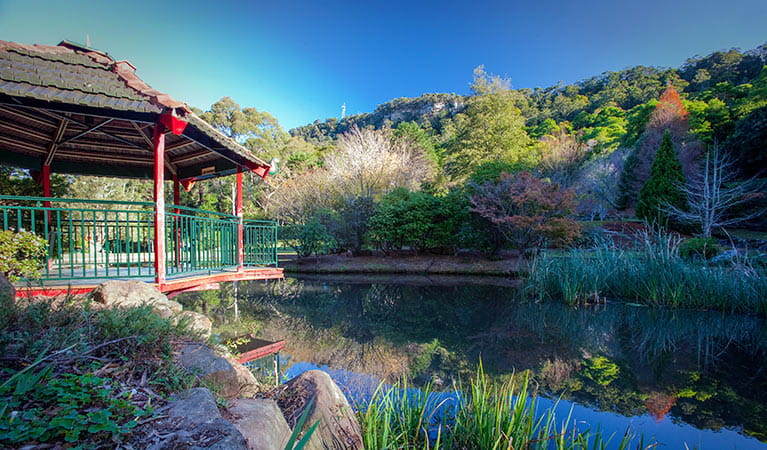
Illawarra Escarpment State Conservation Area's convenient proximity to the city and public transport options means it has become an important venue for sports and recreation - on weekends it buzzes with hikers, picnickers, and cyclists.
- Byarong Park picnic area Easily accessible and featuring all the facilities needed to enjoy a barbecue, the popular Byarong Park picnic area also offers walking track access and birdwatching.
- Illawarra Escarpment mountain bike volunteers The Illawarra mountain bike network is a popular mountain bike network in Illawarra Escarpment State Conservation Area, near Wollongong. If cleaning up the garden is one of your strengths, volunteer today to help us maintain the trails.
- Kembla mountain bike trails Kembla mountain bike trails offer adventures for riders of all ages and skill levels. Located near Wollongong, these special trails have been carefully crafted to get your legs pumping while protecting the environment. Come and ride lightly through Illawarra Escarpment State Conservation Area on Dharawal Country.
- Robertson lookout The most scenic views of Mount Keira can be found at Robertson’s lookout, and tables make this a terrific picnic spot as well.
Plants and animals protected in this park
Animals
-
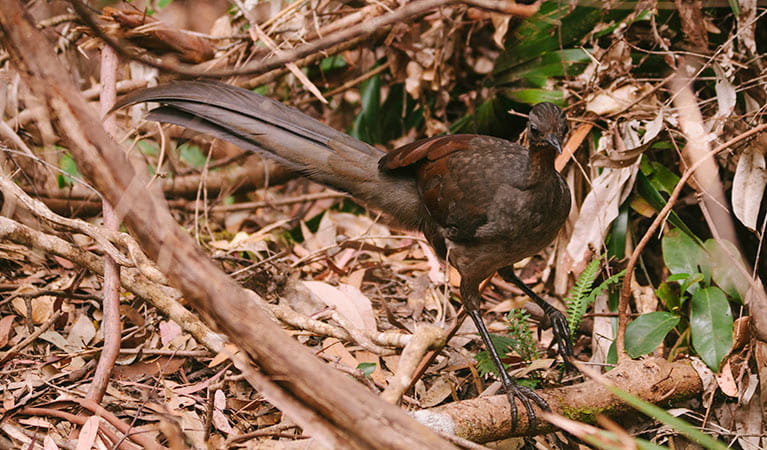
Superb lyrebird (Menura novaehollandiae)
With a complex mimicking call and an elaborate courtship dance to match, the superb lyrebird is one of the most spectacular Australian animals. A bird watching must-see, the superb lyrebird can be found in rainforests and wet woodlands across eastern NSW and Victoria.
-
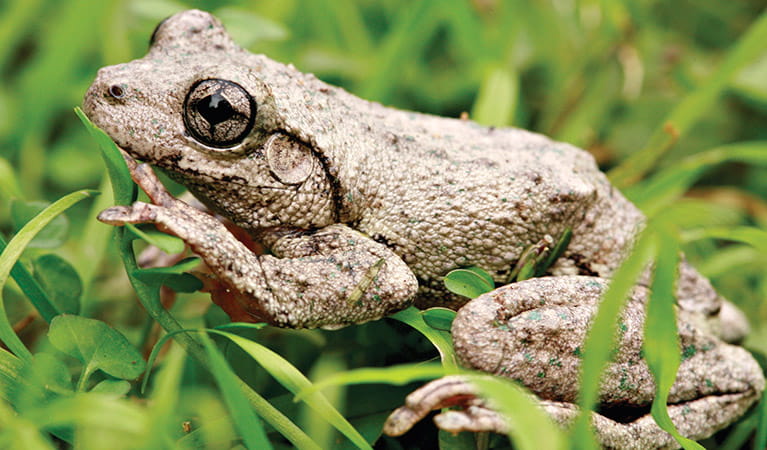
Peron's tree frog (Litoria peroni)
Peron’s tree frog is found right across NSW. These tree-climbing and ground-dwelling Australian animals can quickly change colour, ranging from pale green-grey by day, to a reddish brown with emerald green flecks at night. The male frog has a drill-like call, which has been described as a 'maniacal cackle’.
-
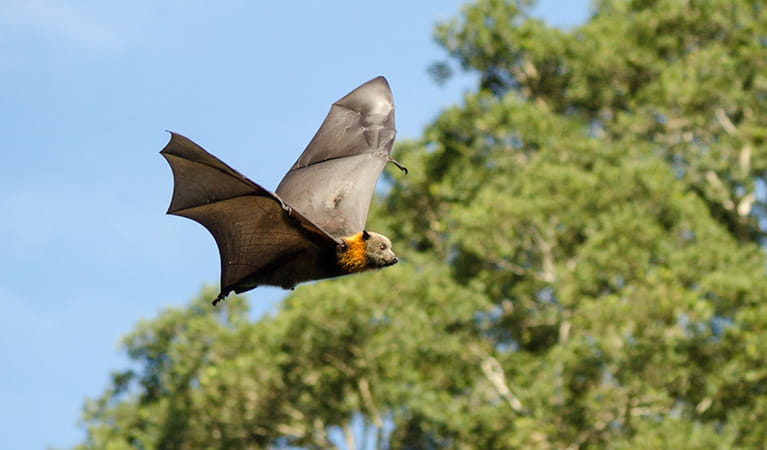
Grey-headed flying-fox (Pteropus poliocephalus)
The grey-headed flying fox is Australia's largest native bat, with a wingspan up to 1m. This threatened species travels up and down south-eastern Australia and plays a vital role in pollinating plants and spreading seeds in our native forests.