Skip to content
Content

Warning Fires, floods and park closures: see latest updates for parks around NSW


Blue Mountains National Park

“My favourite walk of all time is the historic National Pass. Can you believe it's over 100-years-old?”

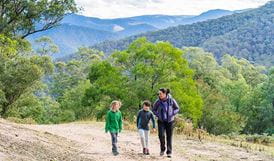
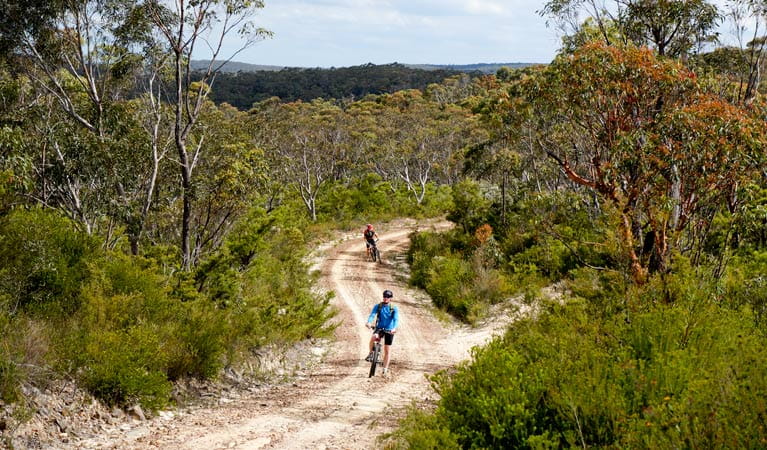
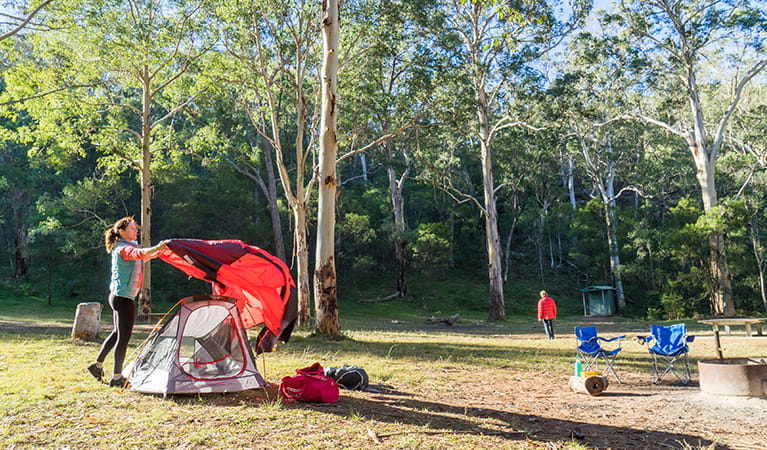
Blue Mountains National Park, one of the most well known parks in Australia, is part of the Greater Blue Mountains World Heritage Area; listed for its remarkable geographic, botanic and cultural values, including protecting sites of Aboriginal cultural significance. This huge park boasts more than 140km of trails and walking tracks and there are great places to go camping, including Euroka or Blue Gum Forest where you can pitch your tent beneath the shade of a majestic eucalypt.

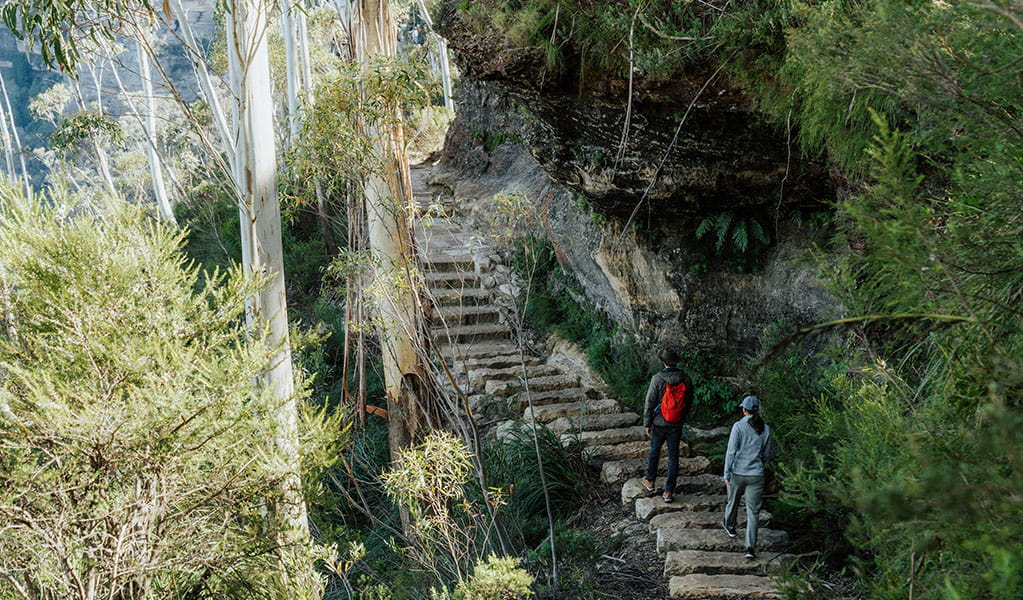
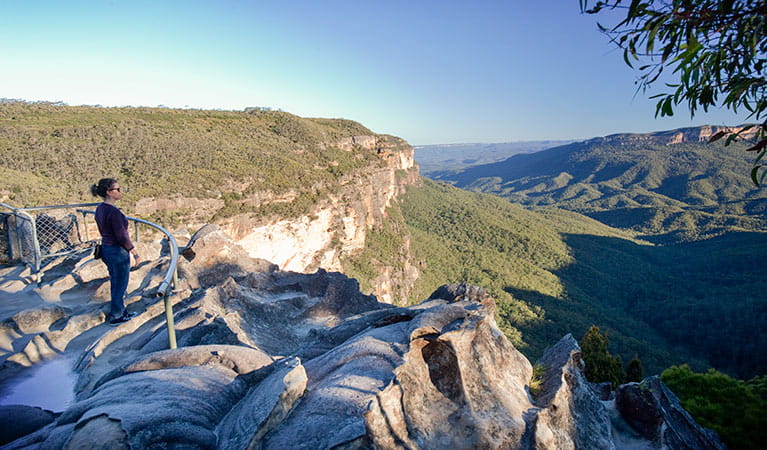
Explore the park’s heritage tracks and lookouts, many of which were created for Victorian-era honeymooners and day-trippers. Imagine walking down some of the steep staircases and narrow tracks in a full suit or a dress with a bustle. Try the historic National Pass or take the clifftop bushwalk at Govetts Leap; a great walk for getting a sense of the land and spectacular views all the way down the Grose Valley. There are also great opportunities for adventure sports; challenging rock climbing spots, great canyons and horseriding.

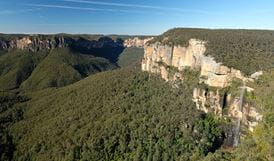
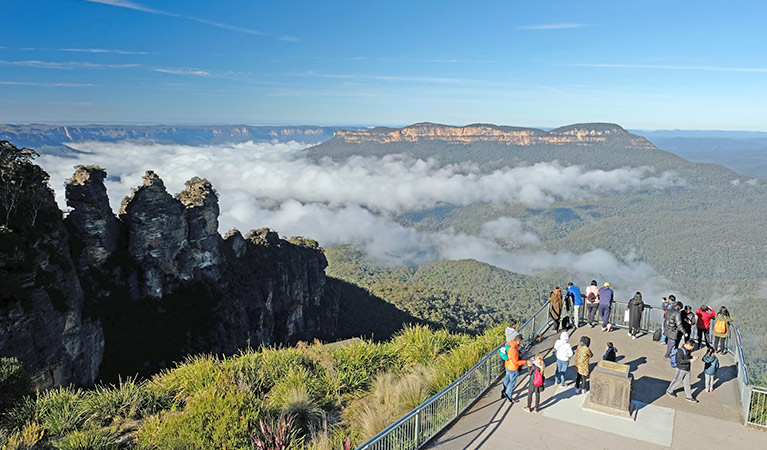
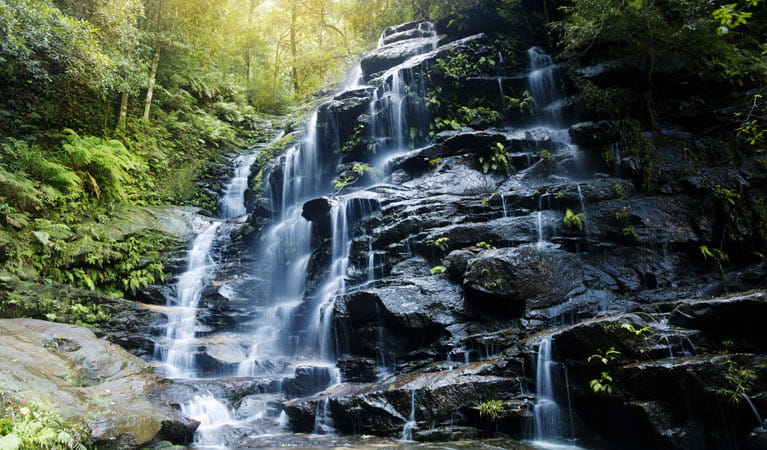
The views from the park’s lookouts are magnificent; you’ll look out over hazy blue forests, waterfalls and interesting rock formations. Echo Point at Katoomba is a popular spot, offering full views of the iconic Three Sisters, and at Sublime Point in Leura, you’ll be able to see 29km away on a clear day. Take a picnic lunch or thermos so you can stop for a while to admire the views.

Highlights
 

Why you should visit

Blue Mountains National Park is a special place. Here are just some of the reasons why:

Ancient connections
Blue Mountains National Park is part of the traditional land of the Gundungurra, Daruk and Wiradjuri people, who have been here since time began, living off the sea and the land. The Aboriginal sites in Blue Mountains National Park are important to Aboriginal people today; they are the physical evidence of a link to their ancestors. As you walk through this area, take some time to think about Aboriginal people and their strong attachment to this ancient landscape and all it contains. Some sites within the park, such as Red Hands Cave, are marked and other sites are not, so please take care when you’re exploring the park.

Greater Blue Mountains World Heritage Area
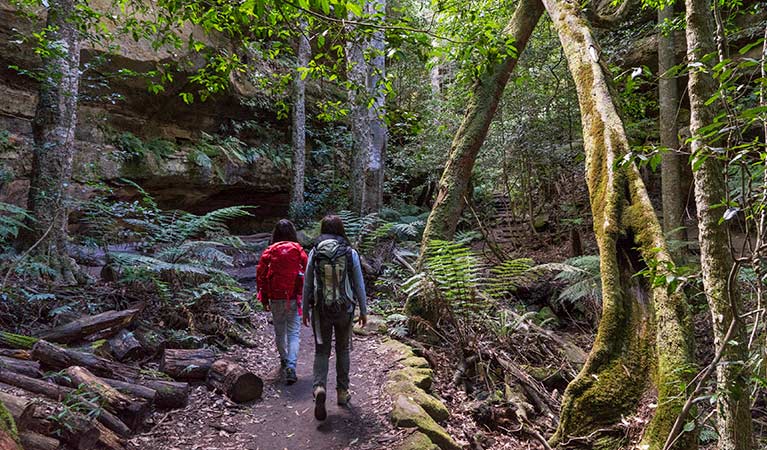
It is truly amazing to think that a city the size of Sydney has the extraordinary one million hectare Blue Mountains just a couple of hours away. It is part of a World Heritage - listed area of amazing values - geographic, botanic and cultural with six Aboriginal groups having connection to the country of the area. The forests of the Greater Blue Mountains World Heritage Area have been described as a natural laboratory for the evolution of eucalypts; more than 90 different eucalypt species are found here – some 13 per cent of all eucalypt species in the world. They grow in a great variety of communities, from tall closed forests, through open forests and woodlands, to the stunted mallee shrublands on the plateaus. Try the overnight hike to Blue Gum Forest where you can camp beneath the stately tall trees with their smooth white-blue-grey bark.

A walker’s paradise
The Blue Mountains boasts one of the most complex track systems of any national park in Australia. Dating from as early as 1825, many of the constructed tracks have national, state and regional significance and several are named to commemorate significant periods or events in Australia’s history. The National Pass is one of the Blue Mountains’ iconic walking tracks. Constructed in 1906-1907, the track was built with shovels, crowbars and dynamite. In 2002 the track underwent major restoration works that included helicopters depositing sandstone blocks along the trail and heritage stonemasons perching on cliff faces to set sandstone ‘inserts’ into steps eroded over the years by weather and walkers. It’s an inspiring walk, with fantastic views of the Jamison Valley and beautiful waterfalls at either end.

Share with friends

Alerts

Blue Mountains National Park

CLOSED AREAS
ATTENTION - Helicopter Operation affecting Katoomba Walking Tracks postponed till Wed 22nd May
The following walking tracks in the Katoomba area will be closed on Wednesday 22nd May 2013 due to helicopter lifting in the new replacement for Honeymoon Bridge:-
Federal Pass (from Katoomba Falls [Cook’s Crossing] to intersection with Dardanelles Pass below Leura.)Federal Pass from Golden Stairs intersection, below Narrow Neck, to the Scenic Railway bottom station.
Giant Stairs
Dardanelles
There will be no access to the top of the Three Sisters, beyond the Prince Henry Cliff Walk junction.
Glenraphael Drive at Narrow Neck will also be closed at the national park boundary – 1.5km from Cliff Drive. There will be no access to Narrow Neck for vehicles or pedestrians.
Access to and from Scenic World will be open via Furber Steps. 
For further information please call 0247 878877

Breakfast Point Lookout closed - Breakfast Point Lookout
Breakfast Point Lookout at Wentworth Falls is closed until further notice.
Campsites at Euroka - Euroka campground
Darug campsite now closed until further notice for maintenance and upgrade. Camping is available at other sites at Euroka Campground. For bookings you may book online at http://www.nationalparks.nsw.gov.au/online-bookings or call 1300 072 757.  For group bookings over 6 and to speak to the local Area office please call 024588 2400 monday to friday.
Claustral Canyon access change
Access to Claustral Canyon via the usual route across private land at Mount Tomah is no longer possible due to landholders denying access. NPWS has sought alternative access through private land without success.  Canyoners should respect the rights of Mount Tomah residents and avoid using private land.
Alternative access and parking from the west side of Mt Bell has been approved. For details please contact the NPWS Heritage Centre, phone 02 4787 8877; open seven days 9.00 am to 4.30 pm.
Glenbrook precinct has re-opened
Access to Jellybean Pool via the road and the walking track is now open
Euroka walking track remains closed as does Ironbarks Firetrail and Portal Waterhole precinct.
Honeymoon Bridge, Three Sisters, Katoomba - Monday 29th April till early June
NPWS will be starting work to replace the Honeymoon bridge at the Three Sisters on Monday 29th April.  Work should be completed by early June.
There will be no access to the bridge during this time.
All walking tracks and other lookouts in the area, including the Giant Stairway, will remain open.  Short term closures for helicopter operations during the work will be advised.
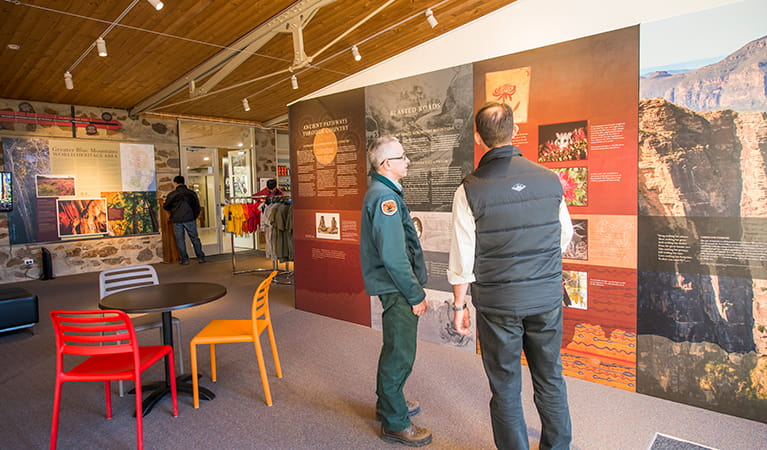
NPWS Heritage Centre is open 7 days a week for information.  Tel: 4787 8877
   
Ingar camping areas - Ingar campground
Vehicle access along Ingar Road may be closed at the end of Queen Elizabeth Drive while private property development works are underway. NPWS requests that visitors respect private property closures.
When the gate is closed Ingar Camping Area will remain open to walkers who access around the private property. Walking distance approximately 13kms.
Murphys Glen camping area closed - Murphys Glen campground
Murphys Glen is closed due to road damage and facilities maintenance.
Wentworth Falls walking tracks
The Undercliff and Overcliff tracks are closed between Princes Rock access and Lyrebird Lookout due to recent landslides. This means visitors doing the National or Wentworth Pass loops will need to return via the Shortcut Track.
The Den Fenella walking track will be closed 7 days per week during upgrade work which commenced 31 January 2013. The Den Fenella lookout remains closed due to structural damage on the bridge. 
 All enquiries to the Blue Mountains Heritage Centre on 02 4787 8877.
Locations affected:Overcliff-Undercliff track, Den Fenella walking track
HAZARD REDUCTION BURNS
Hazard reduction burn
Wild Dog Mountains - CLOSED
All walking routes in the Wild Dog Mountains will remain closed until further notice while hazard reduction burning operations are current. The W7 or Cedarland Ridge Rd from Green Gully to Medlow Gap will be re-opened on Monday 13th May.
Anyone intending to walk in Wild Dogs during May should check the national parks website prior to setting off for any updates regarding affected areas. View a map of the hazard reduction burn planned for the Wild Dogs area (PDF 259KB).
Hazard reduction burn
An aerially ignited prescribed burn will be undertaken along the Gingra Range in Kanangra-Boyd National Park between Friday 17th and Monday 20th May 2013. Walkers are advised to avoid this area during these dates.
All enquiries to NPWS Oberon office on 02 6336 1972 or the Blue Mountains Heritage Centre on 02 4787 8877

Getting there

 Opening times

Blue Mountains National Park is always open but may have to close at times due to poor weather or fire danger. Some parts of the park close overnight; details are provided for specific attractions.

 Fees

Vehicle entry fees

In this park, vehicle entry fees are $7 per vehicle per day. Vehicle entry fees only apply in the Glenbrook area. The park has coin-operated 'pay and display' machines (5c coins not accepted) - please bring correct coins.

 Close to

Blue Mountains National Park (Katoomba) is close to:

  • Lithgow (35km)
  • Penrith (50km)
  • Oberon (54km)
  • Sydney (50km)

 Close to

Blue Mountains National Park (Katoomba) is close to:

  • Lithgow (35km)
  • Penrith (50km)
  • Oberon (54km)
  • Sydney (50km)

 Close to

Blue Mountains National Park (Katoomba) is close to:

  • Lithgow (35km)
  • Penrith (50km)
  • Oberon (54km)
  • Sydney (50km)

 Close to

Blue Mountains National Park (Katoomba) is close to:

  • Lithgow (35km)
  • Penrith (50km)
  • Oberon (54km)
  • Sydney (50km)

 Close to

Blue Mountains National Park (Katoomba) is close to:

  • Lithgow (35km)
  • Penrith (50km)
  • Oberon (54km)
  • Sydney (50km)

 Close to

Blue Mountains National Park (Katoomba) is close to:

  • Lithgow (35km)
  • Penrith (50km)
  • Oberon (54km)
  • Sydney (50km)

 Close to

Blue Mountains National Park (Katoomba) is close to:

  • Lithgow (35km)
  • Penrith (50km)
  • Oberon (54km)
  • Sydney (50km)

 Close to

Blue Mountains National Park (Katoomba) is close to:

  • Lithgow (35km)
  • Penrith (50km)
  • Oberon (54km)
  • Sydney (50km)

 Car

From Sydney:

  • Take the City West Link to Parramatta Road and veer right onto the Western Motorway
  • Travel along the Western Motorway for about 45km
  • Continue along the Great Western Highway and look for signs to Blue Mountains National Park

 Car

From Sydney:

  • Take the City West Link to Parramatta Road and veer right onto the Western Motorway
  • Travel along the Western Motorway for about 45km
  • Continue along the Great Western Highway and look for signs to Blue Mountains National Park

 Car

From Sydney:

  • Take the City West Link to Parramatta Road and veer right onto the Western Motorway
  • Travel along the Western Motorway for about 45km
  • Continue along the Great Western Highway and look for signs to Blue Mountains National Park

 Car

From Sydney:

  • Take the City West Link to Parramatta Road and veer right onto the Western Motorway
  • Travel along the Western Motorway for about 45km
  • Continue along the Great Western Highway and look for signs to Blue Mountains National Park

 Car

From Sydney:

  • Take the City West Link to Parramatta Road and veer right onto the Western Motorway
  • Travel along the Western Motorway for about 45km
  • Continue along the Great Western Highway and look for signs to Blue Mountains National Park

 Car

From Sydney:

  • Take the City West Link to Parramatta Road and veer right onto the Western Motorway
  • Travel along the Western Motorway for about 45km
  • Continue along the Great Western Highway and look for signs to Blue Mountains National Park

 Car

From Sydney:

  • Take the City West Link to Parramatta Road and veer right onto the Western Motorway
  • Travel along the Western Motorway for about 45km
  • Continue along the Great Western Highway and look for signs to Blue Mountains National Park

 Car

From Sydney:

  • Take the City West Link to Parramatta Road and veer right onto the Western Motorway
  • Travel along the Western Motorway for about 45km
  • Continue along the Great Western Highway and look for signs to Blue Mountains National Park

 Public transport

Blue Mountains National Park is accessible from a number of stations, including Blackheath, Glenbrook, Katoomba, Leura, Mount Victoria and Wentworth Falls. For information about public transport options, visit the NSW transport info website

 Public transport

Blue Mountains National Park is accessible from a number of stations, including Blackheath, Glenbrook, Katoomba, Leura, Mount Victoria and Wentworth Falls. For information about public transport options, visit the NSW transport info website

 Public transport

Blue Mountains National Park is accessible from a number of stations, including Blackheath, Glenbrook, Katoomba, Leura, Mount Victoria and Wentworth Falls. For information about public transport options, visit the NSW transport info website

 Public transport

Blue Mountains National Park is accessible from a number of stations, including Blackheath, Glenbrook, Katoomba, Leura, Mount Victoria and Wentworth Falls. For information about public transport options, visit the NSW transport info website

 Public transport

Blue Mountains National Park is accessible from a number of stations, including Blackheath, Glenbrook, Katoomba, Leura, Mount Victoria and Wentworth Falls. For information about public transport options, visit the NSW transport info website

 Public transport

Blue Mountains National Park is accessible from a number of stations, including Blackheath, Glenbrook, Katoomba, Leura, Mount Victoria and Wentworth Falls. For information about public transport options, visit the NSW transport info website

 Public transport

Blue Mountains National Park is accessible from a number of stations, including Blackheath, Glenbrook, Katoomba, Leura, Mount Victoria and Wentworth Falls. For information about public transport options, visit the NSW transport info website

 Public transport

Blue Mountains National Park is accessible from a number of stations, including Blackheath, Glenbrook, Katoomba, Leura, Mount Victoria and Wentworth Falls. For information about public transport options, visit the NSW transport info website

 Bike

Check out the Bicycle information for NSW website for more information

 Bike

Check out the Bicycle information for NSW website for more information

 Bike

Check out the Bicycle information for NSW website for more information

 Bike

Check out the Bicycle information for NSW website for more information

 Bike

Check out the Bicycle information for NSW website for more information

 Bike

Check out the Bicycle information for NSW website for more information

 Bike

Check out the Bicycle information for NSW website for more information

 Bike

Check out the Bicycle information for NSW website for more information

Weather and climate

 Visiting through the seasons

There are so many great tracks and trails waiting for you in Blue Mountains National Park. Here are some of the highlights:

Spring (Sept, Oct, Nov)

  • Walk the quiet sandy trail surrounded by flannel flowers, native irises and boronias to the impressive lookout at Lockleys Pylon off Mount Hay Road

Summer (Dec, Jan, Feb)

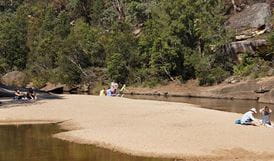
  • On a hot day Jellybean Pool is a great place for a dip or walk along the shaded depths of the Grand Canyon at Katoomba

Autumn  (Mar, Apr, May)

  • The park’s waterfalls should be impressive after summer rain so it’s a good time to walk the waterfall tracks. Try Victoria Falls for a challenging walk or take the further steps beside Katoomba Falls.

Winter (Jun, Jul, Aug)

  • Walk the historic National Pass, one of the Blue Mountain’s classic walks. When you’re finished, head to Conservation Hut for a hot chocolate or cuppa – you will have earned it.

 Visiting through the seasons

There are so many great tracks and trails waiting for you in Blue Mountains National Park. Here are some of the highlights:

Spring (Sept, Oct, Nov)

  • Walk the quiet sandy trail surrounded by flannel flowers, native irises and boronias to the impressive lookout at Lockleys Pylon off Mount Hay Road

Summer (Dec, Jan, Feb)

  • On a hot day Jellybean Pool is a great place for a dip or walk along the shaded depths of the Grand Canyon at Katoomba

Autumn  (Mar, Apr, May)

  • The park’s waterfalls should be impressive after summer rain so it’s a good time to walk the waterfall tracks. Try Victoria Falls for a challenging walk or take the further steps beside Katoomba Falls.

Winter (Jun, Jul, Aug)

  • Walk the historic National Pass, one of the Blue Mountain’s classic walks. When you’re finished, head to Conservation Hut for a hot chocolate or cuppa – you will have earned it.

 Visiting through the seasons

There are so many great tracks and trails waiting for you in Blue Mountains National Park. Here are some of the highlights:

Spring (Sept, Oct, Nov)

  • Walk the quiet sandy trail surrounded by flannel flowers, native irises and boronias to the impressive lookout at Lockleys Pylon off Mount Hay Road

Summer (Dec, Jan, Feb)

  • On a hot day Jellybean Pool is a great place for a dip or walk along the shaded depths of the Grand Canyon at Katoomba

Autumn  (Mar, Apr, May)

  • The park’s waterfalls should be impressive after summer rain so it’s a good time to walk the waterfall tracks. Try Victoria Falls for a challenging walk or take the further steps beside Katoomba Falls.

Winter (Jun, Jul, Aug)

  • Walk the historic National Pass, one of the Blue Mountain’s classic walks. When you’re finished, head to Conservation Hut for a hot chocolate or cuppa – you will have earned it.

 Visiting through the seasons

There are so many great tracks and trails waiting for you in Blue Mountains National Park. Here are some of the highlights:

Spring (Sept, Oct, Nov)

  • Walk the quiet sandy trail surrounded by flannel flowers, native irises and boronias to the impressive lookout at Lockleys Pylon off Mount Hay Road

Summer (Dec, Jan, Feb)

  • On a hot day Jellybean Pool is a great place for a dip or walk along the shaded depths of the Grand Canyon at Katoomba

Autumn  (Mar, Apr, May)

  • The park’s waterfalls should be impressive after summer rain so it’s a good time to walk the waterfall tracks. Try Victoria Falls for a challenging walk or take the further steps beside Katoomba Falls.

Winter (Jun, Jul, Aug)

  • Walk the historic National Pass, one of the Blue Mountain’s classic walks. When you’re finished, head to Conservation Hut for a hot chocolate or cuppa – you will have earned it.

 Visiting through the seasons

There are so many great tracks and trails waiting for you in Blue Mountains National Park. Here are some of the highlights:

Spring (Sept, Oct, Nov)

  • Walk the quiet sandy trail surrounded by flannel flowers, native irises and boronias to the impressive lookout at Lockleys Pylon off Mount Hay Road

Summer (Dec, Jan, Feb)

  • On a hot day Jellybean Pool is a great place for a dip or walk along the shaded depths of the Grand Canyon at Katoomba

Autumn  (Mar, Apr, May)

  • The park’s waterfalls should be impressive after summer rain so it’s a good time to walk the waterfall tracks. Try Victoria Falls for a challenging walk or take the further steps beside Katoomba Falls.

Winter (Jun, Jul, Aug)

  • Walk the historic National Pass, one of the Blue Mountain’s classic walks. When you’re finished, head to Conservation Hut for a hot chocolate or cuppa – you will have earned it.

 Visiting through the seasons

There are so many great tracks and trails waiting for you in Blue Mountains National Park. Here are some of the highlights:

Spring (Sept, Oct, Nov)

  • Walk the quiet sandy trail surrounded by flannel flowers, native irises and boronias to the impressive lookout at Lockleys Pylon off Mount Hay Road

Summer (Dec, Jan, Feb)

  • On a hot day Jellybean Pool is a great place for a dip or walk along the shaded depths of the Grand Canyon at Katoomba

Autumn  (Mar, Apr, May)

  • The park’s waterfalls should be impressive after summer rain so it’s a good time to walk the waterfall tracks. Try Victoria Falls for a challenging walk or take the further steps beside Katoomba Falls.

Winter (Jun, Jul, Aug)

  • Walk the historic National Pass, one of the Blue Mountain’s classic walks. When you’re finished, head to Conservation Hut for a hot chocolate or cuppa – you will have earned it.

 Visiting through the seasons

There are so many great tracks and trails waiting for you in Blue Mountains National Park. Here are some of the highlights:

Spring (Sept, Oct, Nov)

  • Walk the quiet sandy trail surrounded by flannel flowers, native irises and boronias to the impressive lookout at Lockleys Pylon off Mount Hay Road

Summer (Dec, Jan, Feb)

  • On a hot day Jellybean Pool is a great place for a dip or walk along the shaded depths of the Grand Canyon at Katoomba

Autumn  (Mar, Apr, May)

  • The park’s waterfalls should be impressive after summer rain so it’s a good time to walk the waterfall tracks. Try Victoria Falls for a challenging walk or take the further steps beside Katoomba Falls.

Winter (Jun, Jul, Aug)

  • Walk the historic National Pass, one of the Blue Mountain’s classic walks. When you’re finished, head to Conservation Hut for a hot chocolate or cuppa – you will have earned it.

 Visiting through the seasons

There are so many great tracks and trails waiting for you in Blue Mountains National Park. Here are some of the highlights:

Spring (Sept, Oct, Nov)

  • Walk the quiet sandy trail surrounded by flannel flowers, native irises and boronias to the impressive lookout at Lockleys Pylon off Mount Hay Road

Summer (Dec, Jan, Feb)

  • On a hot day Jellybean Pool is a great place for a dip or walk along the shaded depths of the Grand Canyon at Katoomba

Autumn  (Mar, Apr, May)

  • The park’s waterfalls should be impressive after summer rain so it’s a good time to walk the waterfall tracks. Try Victoria Falls for a challenging walk or take the further steps beside Katoomba Falls.

Winter (Jun, Jul, Aug)

  • Walk the historic National Pass, one of the Blue Mountain’s classic walks. When you’re finished, head to Conservation Hut for a hot chocolate or cuppa – you will have earned it.

 Temperature

Summer

  • The average temperature ranges between 15°C and  25°C
  • The area's highest recorded temperature in summer is 36.6°C

Winter ­

  • The average temperature ranges between 3°C and 12°C
  • The area’s lowest recorded temperature in winter is -8.2°C

 Temperature

Summer

  • The average temperature ranges between 15°C and  25°C
  • The area's highest recorded temperature in summer is 36.6°C

Winter ­

  • The average temperature ranges between 3°C and 12°C
  • The area’s lowest recorded temperature in winter is -8.2°C

 Temperature

Summer

  • The average temperature ranges between 15°C and  25°C
  • The area's highest recorded temperature in summer is 36.6°C

Winter ­

  • The average temperature ranges between 3°C and 12°C
  • The area’s lowest recorded temperature in winter is -8.2°C

 Temperature

Summer

  • The average temperature ranges between 15°C and  25°C
  • The area's highest recorded temperature in summer is 36.6°C

Winter ­

  • The average temperature ranges between 3°C and 12°C
  • The area’s lowest recorded temperature in winter is -8.2°C

 Temperature

Summer

  • The average temperature ranges between 15°C and  25°C
  • The area's highest recorded temperature in summer is 36.6°C

Winter ­

  • The average temperature ranges between 3°C and 12°C
  • The area’s lowest recorded temperature in winter is -8.2°C

 Temperature

Summer

  • The average temperature ranges between 15°C and  25°C
  • The area's highest recorded temperature in summer is 36.6°C

Winter ­

  • The average temperature ranges between 3°C and 12°C
  • The area’s lowest recorded temperature in winter is -8.2°C

 Temperature

Summer

  • The average temperature ranges between 15°C and  25°C
  • The area's highest recorded temperature in summer is 36.6°C

Winter ­

  • The average temperature ranges between 3°C and 12°C
  • The area’s lowest recorded temperature in winter is -8.2°C

 Temperature

Summer

  • The average temperature ranges between 15°C and  25°C
  • The area's highest recorded temperature in summer is 36.6°C

Winter ­

  • The average temperature ranges between 3°C and 12°C
  • The area’s lowest recorded temperature in winter is -8.2°C

 Rainfall

  • The wettest month on average is February, the driest month on average is September
  • The area's highest recorded rainfall is 285mm in one day

 Rainfall

  • The wettest month on average is February, the driest month on average is September
  • The area's highest recorded rainfall is 285mm in one day

 Rainfall

  • The wettest month on average is February, the driest month on average is September
  • The area's highest recorded rainfall is 285mm in one day

 Rainfall

  • The wettest month on average is February, the driest month on average is September
  • The area's highest recorded rainfall is 285mm in one day

 Rainfall

  • The wettest month on average is February, the driest month on average is September
  • The area's highest recorded rainfall is 285mm in one day

 Rainfall

  • The wettest month on average is February, the driest month on average is September
  • The area's highest recorded rainfall is 285mm in one day

 Rainfall

  • The wettest month on average is February, the driest month on average is September
  • The area's highest recorded rainfall is 285mm in one day

 Rainfall

  • The wettest month on average is February, the driest month on average is September
  • The area's highest recorded rainfall is 285mm in one day

Contacts

Blue Mountains (Blackheath)

Phone: (02) 4787 8877
Email: bluemountains.heritagecentre@environment.nsw.gov.au
Street address: Govetts Leap Road, Blackheath NSW
Opening hours: 9am - 4.30pm, seven days (closed Christmas Day)


Blue Mountains (Glenbrook)

Phone: 02 4739 2950 (Infoline only)
Street address: Blue Mountains National Park, Bruce Road, Glenbrook NSW
Opening hours: Entry station is open weekends, public holidays and school holidays only


Richmond

Phone: 02 4588 2400
Street address: Bowmans Cottage, 370 Windsor Street, Richmond NSW
Opening hours: 8.30am - 4.30pm, Monday to Friday


Oberon

Phone: 02 6336 1972
Street address: 38 Ross Street, Oberon NSW
Opening hours: 9.00am - 4.30pm, Monday to Friday

Close
 
 
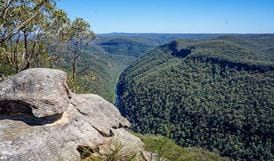
Hanging rock, Blue Mountains National Park. Photo: David Finnegan